Between Fear and ‘Likes’: Fatphobia Emerges as the Leading Form of Hate Speech Among Teens Online
-
DateJul 28 2026
During adolescence, physical appearance plays a central role in identity formation and social acceptance. However, in the digital environment, this exposure has turned into a dangerous trap for many minors.
According to the report “Between Fear and Likes: Digital Fatphobia in Adolescence”—based on survey responses from over 1,000 Spanish youth aged 12 to 17—weight- and appearance-based discrimination is the most common form of online hate.
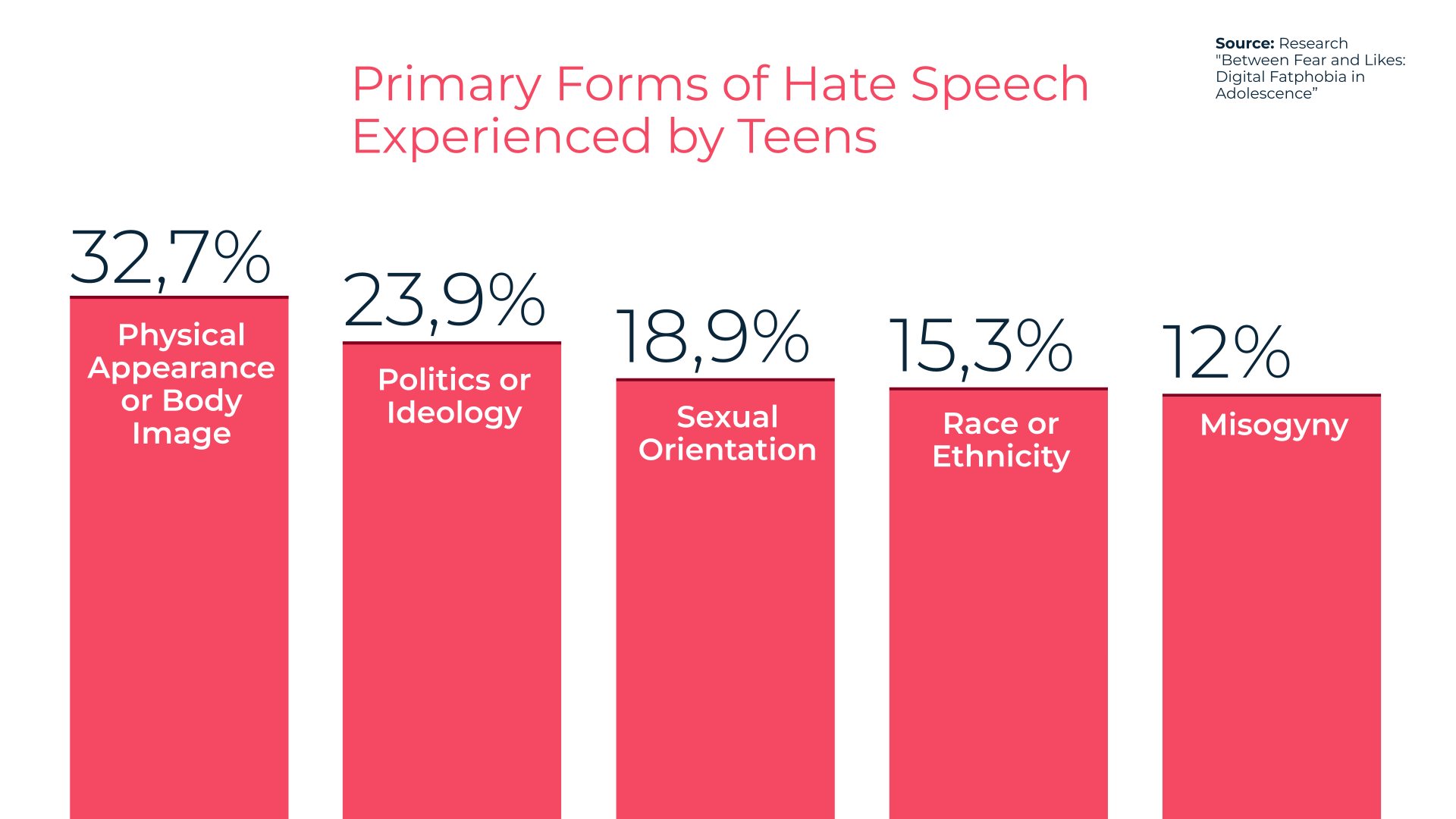
The numbers are striking: 32.7% of teenagers report encountering body-shaming hate speech “often or very often.” This figure far surpasses other historically documented forms of discrimination, such as political hate speech (23.9%), racism (15.3%), or misogyny (12%).
Fast-paced, video-centric platforms are the main epicenter of this hostility. TikTok tops the list, with 62.3% of respondents identifying it as the space where they encounter the most discriminatory discourse, followed by Instagram at 43.1%.
The Culture of Self-Censorship: Hiding to Survive
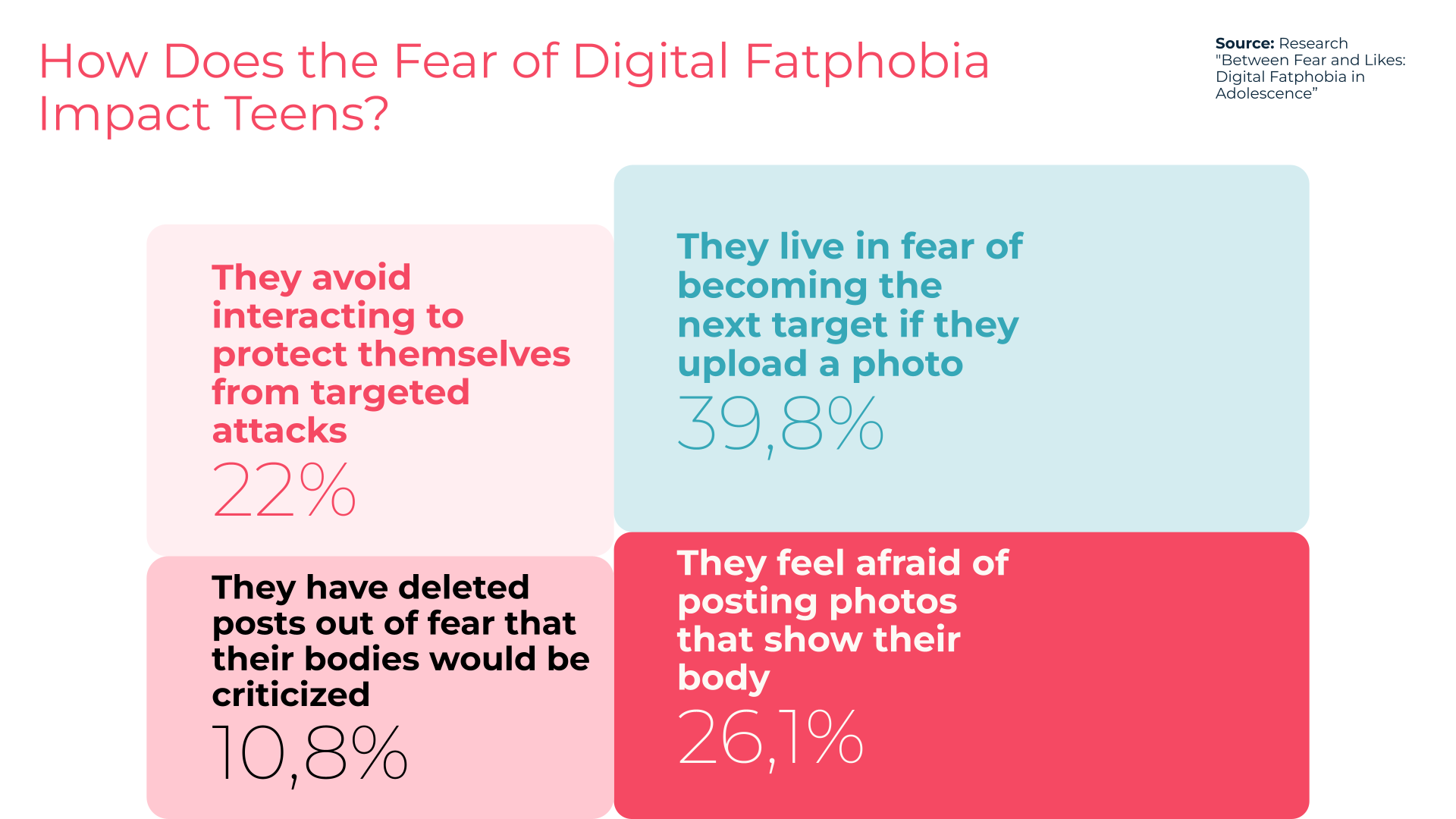
This relentless exposure to body shaming does not happen without consequences. Digital fatphobia acts as an environment that shapes the daily lives of young people. Far from being passive bystanders, 66.5% of teenagers admit to feeling uncomfortable when watching others’ bodies being criticized.
This discomfort quickly turns into personal fear: 39.8% of youth fear becoming the next target if they post a photo of themselves. To avoid scrutiny, younger generations are turning to self-censorship. 26.1% report a direct fear of showing their bodies online, 23.9% have stopped liking or commenting on posts for fear of retaliation, and nearly 11% confess to having gone as far as deleting posts out of fear of body shaming.
High Awareness, Low Action
Paradoxically, the perpetrators of this hate are not just invisible trolls. Although 33.4% of young people perceive that these messages originate from anonymous accounts, 26.1% point to peers their own age, proving that body shaming has become normalized among youth. In fact, a troubling cultural validation persists: 24.1% of minors believe that if someone puts themselves out there on social media, they must accept that they will face criticism.
Despite this normalization, teens are not blind to the pain of others. 83.3% are fully aware that these types of messages can deeply impact the mental health of those who receive them, and 77% report knowing how to spot when content is ridiculing someone. However, empathy rarely translates into intervention: only 23.6% actively respond to hate, whether by reporting it or leaving comments to defend the victim.
The issue of fatphobia in the age of “likes” goes beyond a simple matter of individual self-esteem. As researchers conclude, we are witnessing a mechanism of “socio-digital order” that dictates which bodies have the right to occupy public spaces online. As long as aesthetic pressure remains and group passivity prevails, thousands of teenagers will continue choosing silence—filtering their images and hiding their bodies behind the screen to avoid becoming the next target.