
-
DateSep 25 2026
The smartphone has become the command center of adolescence. However, the latest European macro-study, EU Kids Online, reveals that being constantly connected does not equal knowing how to navigate the web safely or critically.
Growing up in today’s Europe means carrying the gateway to the digital world right in your pocket. For the generation of kids aged 10 to 16, screens are not an optional accessory; they are the public square where they study, play, socialize, and build their identity.
The EU Kids Online 2026 report, based on a representative survey of 28,465 minors across 19 European countries, analyzes how young people inhabit the web. Its findings dispel alarmist rhetoric and oversimplifications: we are looking at a generation that is more connected than ever, yet facing striking paradoxes when it comes to safety, critical skills, and guidance.
Hyperconnected from Their Pockets: The Era of the Omnipresent Smartphone
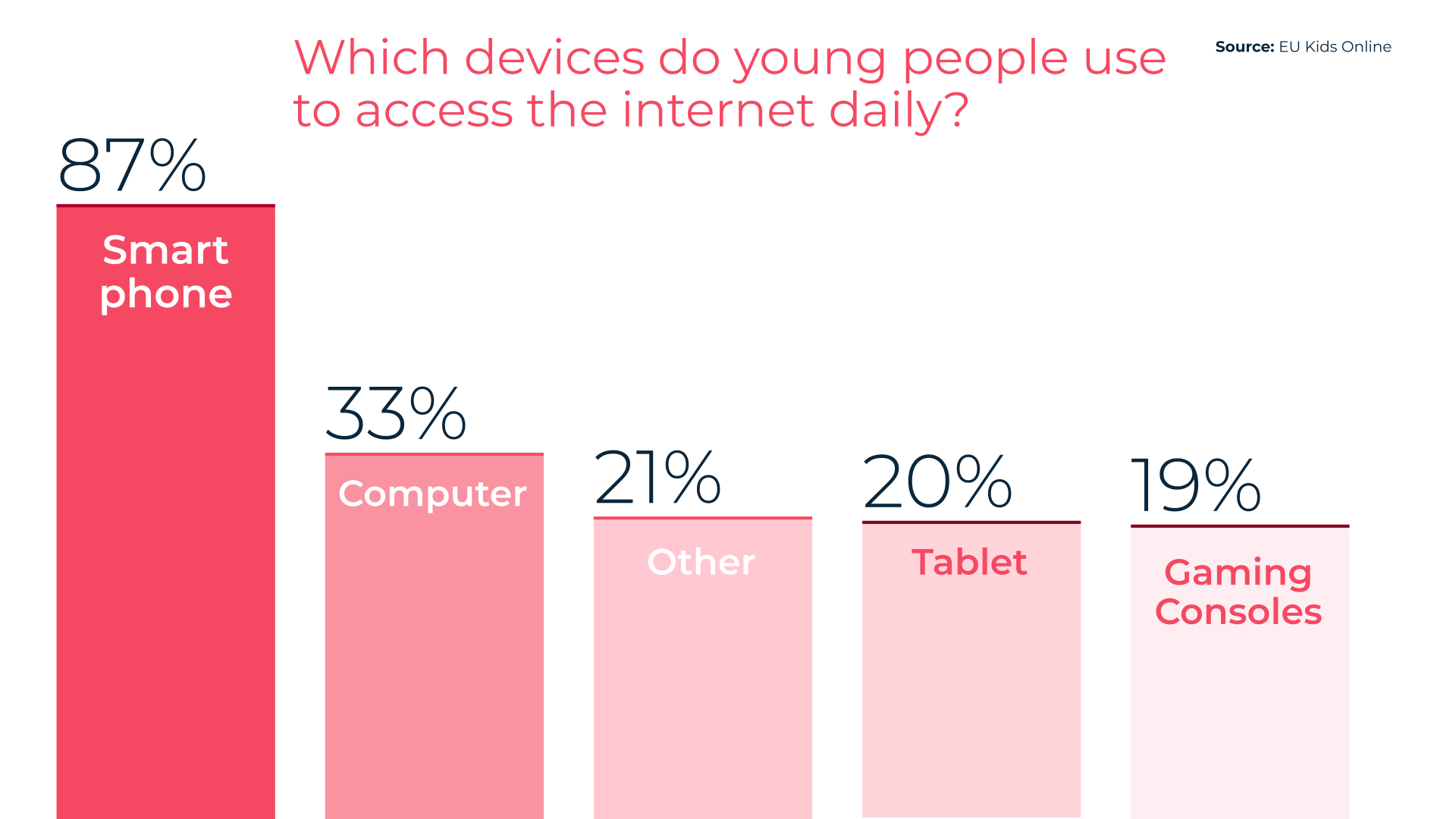
If anything defines young people’s daily routine, it is the absolute dominance of the mobile phone. 87% of youth aged 10 to 16 access the Internet daily via a smartphone, solidifying an upward trend from the 80% recorded in 2020.
Laptops and desktops lag far behind (33%), followed by tablets (20%) and gaming consoles (19%). Connection frequency highlights just how embedded mobile devices are in their lives: 58% go online several times a day.
However, age creates the ultimate divide: while only 27% of 10-year-olds report connecting this frequently, that figure surges to 76% among 15- and 16-year-olds.
Opportunities and Skills: Tech-Savvy in Use, Defenseless Against the Algorithm
The Internet is, above all, a space for socializing and entertainment. 78% of minors use the web daily to keep in touch with friends, and a growing number rely on generative Artificial Intelligence to complete schoolwork or synthesize information.
Yet, the report shatters the myth of the “digital native”: being connected does not mean being skilled.
Although 77% know how to technically secure their devices (using a PIN or fingerprint), critical navigation skills remain low:
-
Only 42% know how to use private browsing to protect their data.
-
Just 45% are familiar with advanced search features.
-
Barely half (52%) claim to know how to fact-check whether information found online is accurate.
This lack of critical literacy leaves them particularly exposed in an environment dominated by recommendation algorithms and commercial content they cannot always identify.
Online Shadows: Violence, Extreme Thinness, and Hate Speech
Exposure to potentially harmful content has risen and is now an everyday reality. 40% of young Europeans have seen gory or violent images of suffering people or animals in the past year. This is closely followed by content promoting extreme thinness (39%), posts about self-harm methods (37%), and dangerous challenges (36%).
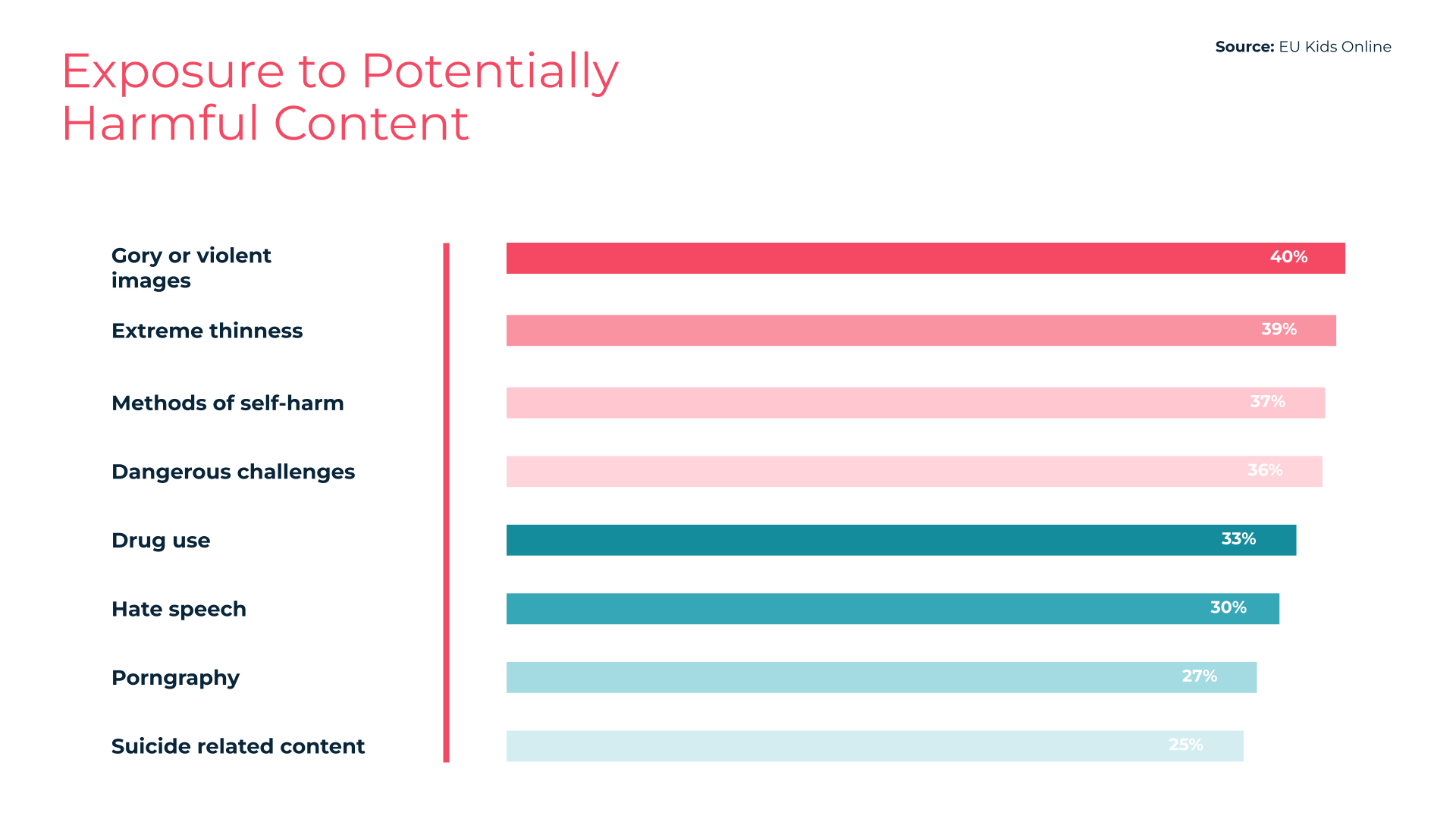
Adding to this is the relentless presence of hate speech: 30% of minors encounter hate or degrading content at least once a month. A key finding in the report is that 90% of these encounters occur unintentionally. When the contact is involuntary, 57% of young people report feeling deeply upset or disgusted.
Bullying and Cyberbullying: From the Classroom to the Screen
The landscape of school bullying shows that the digital space amplifies offline dynamics rather than replacing them.
39% of young people report being treated in a hurtful or cruel way over the past year. In-person (face-to-face) victimization remains more common (29%) than online-only abuse (17%).
The aggressors are overwhelmingly friends and classmates. However, the internet introduces a destabilizing factor: 31% of online harassment stems from strangers, and 8% occurs under total anonymity. Furthermore, social inequalities take a toll: minors from vulnerable socioeconomic backgrounds experience bullying far more frequently (51%) than those from higher-income families (36%).
What Happens When Troubles Arise? The Challenge of Family Trust
Despite heavy technology use, only 48% of European children and teenagers feel safe when browsing the web. The perception of control and agency is strikingly low: barely 14% feel “empowered” or in full control online.
When they face a disturbing online experience—something that happens monthly to 23% of minors—their avenues for help are revealing:
-
43% turn to a friend or classmate first.
-
Only 35% reach out to parents or caregivers.
-
A troubling 20% tell no one at all, keeping their distress to themselves.
Although 78% of minors find it easy to talk to their parents about general issues, when conflicts happen online, the fear of being misunderstood, losing screen privileges, or facing grounded devices leads 1 in 5 young people to navigate digital risks in total isolation.