-
DateOct 7 2026
Ensuring the safety and digital rights of children and youth without detracting in the slightest from their freedoms or the opportunities offered by technology is one of the most complex and pressing debates of our time.
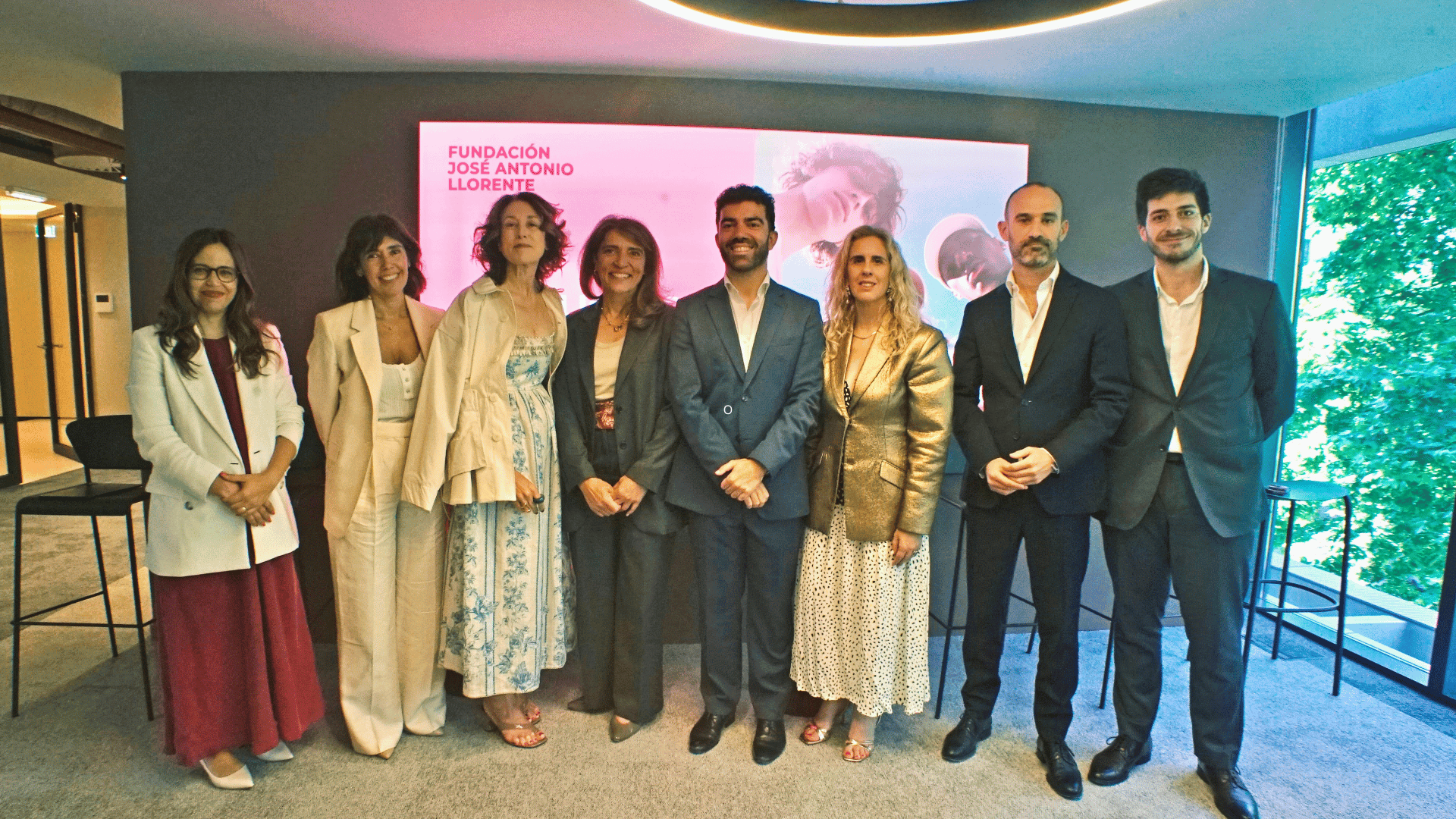
To address this challenge from a broad perspective—combining institutional vision, digital humanism, and legislative analysis—the José Antonio Llorente Foundation hosted the event “Youth Digital Rights.”
Hand in hand with Rubén Pérez Correa, Secretary of State for Youth and Children; Luisa Alli, Director General of the Hermes Foundation; and Moisés Barrio, Legal Counsel to the Council of State and expert jurist in digital law, we analyzed the keys to building a safe digital environment.
Between National Urgency and the European Fit
Restoring Legislative Consensus:
Rubén Pérez Correa highlighted that, following the stalled progress of the Organic Law for the protection of minors in digital environments due to the early election call, any political faction forming a government must prioritize taking this legislative text back up.
Furthermore, he defended the need to move away from technophobia and isolationism. “If there are young people in the real world, there must be young people in the digital world,” he noted.
The Solid Foundation of the Spanish Legal System:
For his part, Moisés Barrio recalled that Spain has been a benchmark in this area for years, pointing out that in 2018, amendments to data protection law had already incorporated a specific title on the guarantee of digital rights.
The Council of State legal counsel explained that Articles 83 and 84 of said law establish the right to digital education and the obligation to safeguard minors to ensure a balanced, critical, and respectful use aligned with human dignity.
The Challenge of European Scale:
Regarding the draft regulation presented by the European Commission, Moisés Barrio detailed that it proposes a tiered age-based system: a ban on social media accounts for children under 13, supervised micro-accounts from ages 13 to 15, and autonomous accounts with safety-by-design starting at age 15.
The legal expert indicated that while this European model may present a certain contradiction with the 16-year threshold set in the Spanish bill, the European proposal still has a parliamentary road ahead and will coexist with the guarantees already established under domestic law.
Age Verification and Privacy: A Technically Viable Equation
Digital Identity Without Mass Tracking:
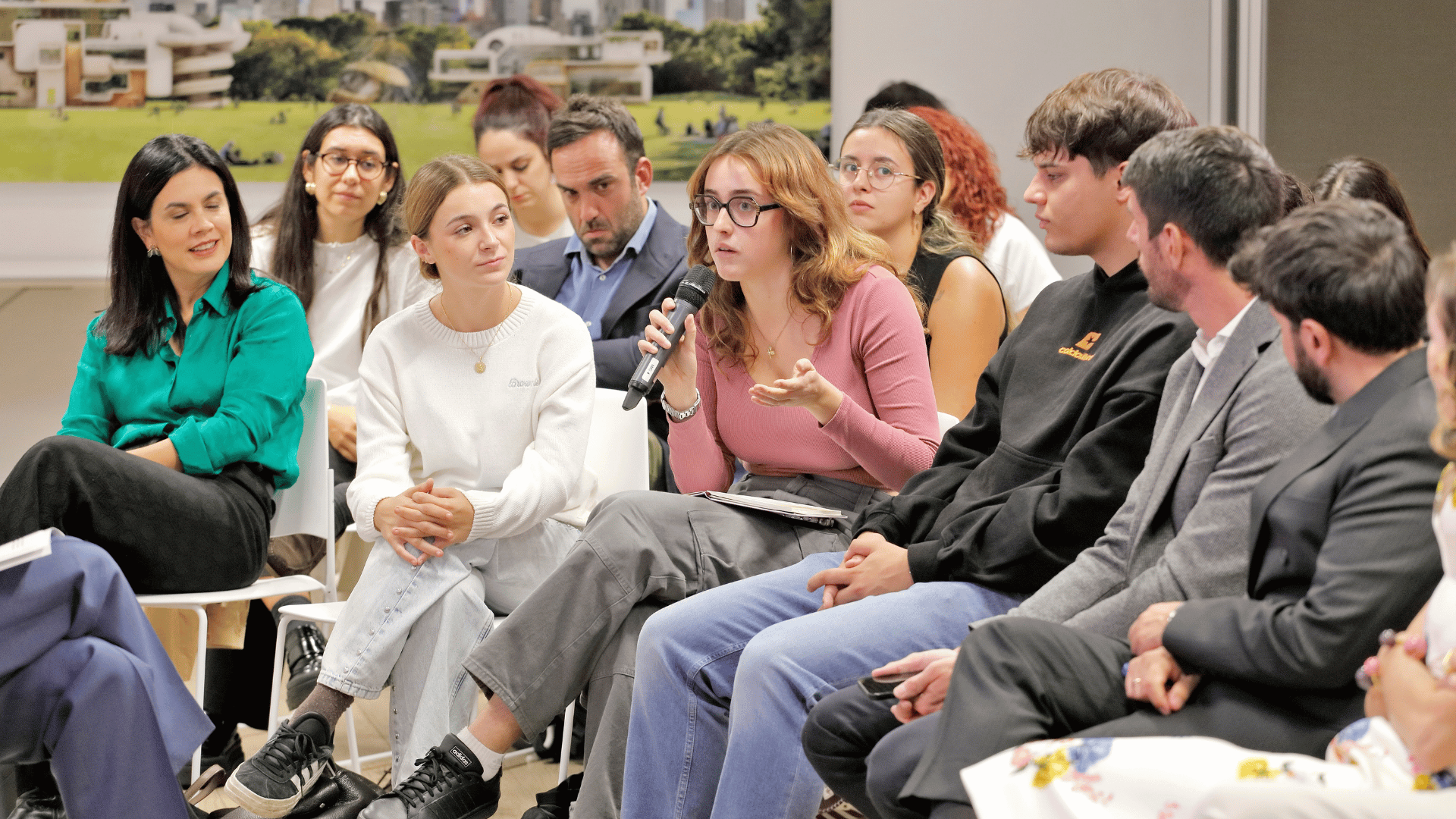
Countering the argument that age verification destroys anonymity or requires tracking the user, Moisés Barrio clarified that it is entirely possible to reconcile data privacy with child protection.
The digital law expert explained that it simply requires separating initial identity verification from platform operations: through an attribute attestation on the device itself (a cryptographic metadata validating that an age threshold is met), the social network receives a anonymous ‘yes’ or ‘no’, without needing to store ID cards or monitor browsing behavior.
Responsibility by Design and Safe Environments:
Once the age group is validated, Moisés Barrio noted that the compliance burden must shift to the platforms. The counsel argued that tech giants must apply maximum privacy settings by default, block contact suggestions from strangers, and disable addictive mechanics like autoplay or infinite scroll.
Demands on the Tech Sector:
Echoing this approach, Rubén Pérez Correa stressed that corporate self-regulation has failed miserably. He cited how platforms like TikTok flooded the streets with advertising about “parenting schools” right when the Government announced the draft law, proving that they only react under regulatory pressure.
“The tech sector must face the same limitations imposed on a nuclear power plant, an automotive industry, or agricultural processing,” asserted the Secretary of State.
Digital Humanism: Dismantling Fatalism and Applying Bioethics
Two Distinct Conversations:
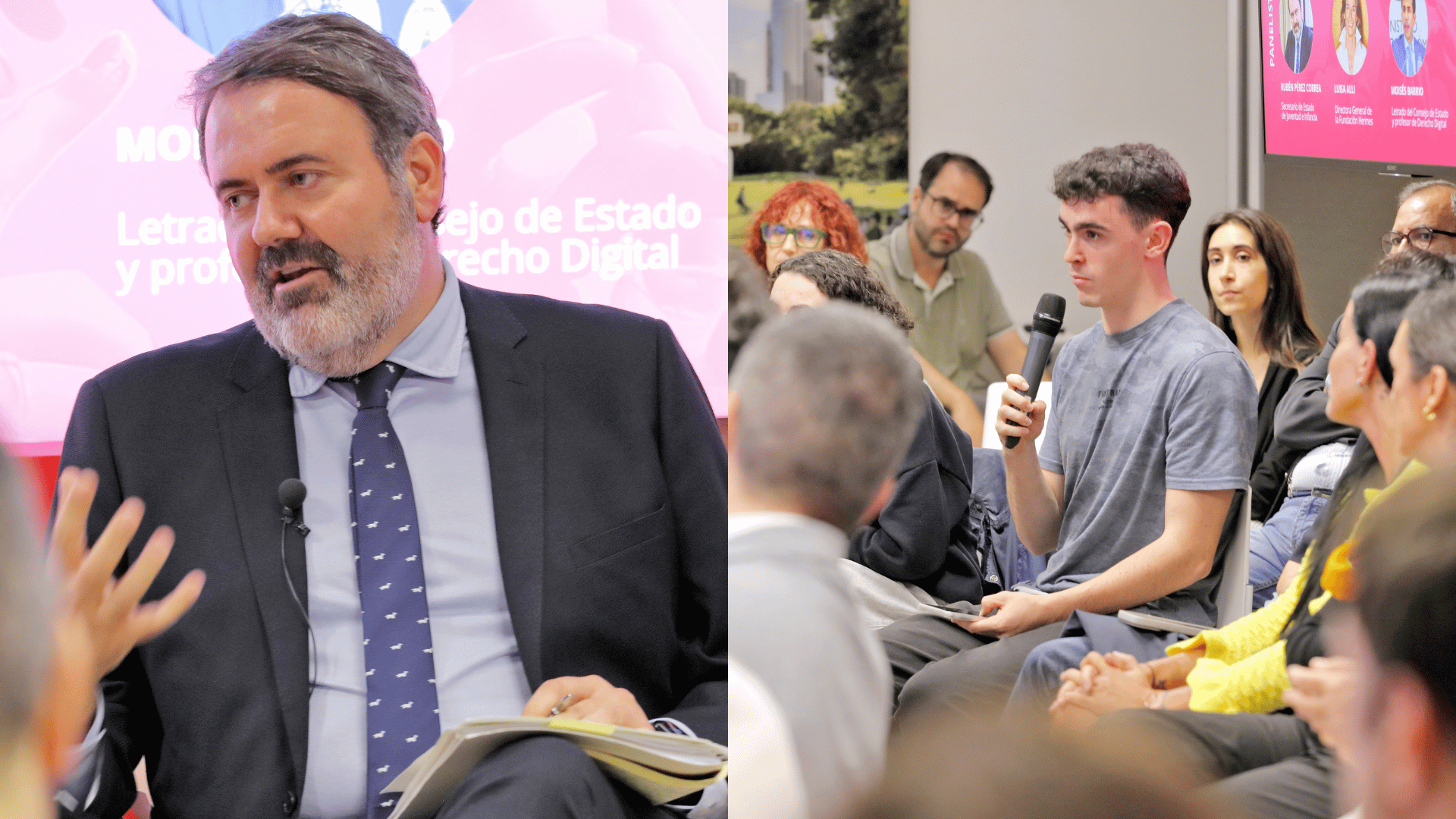
Luisa Alli emphasized the necessity of keeping two essential debates separate: on one hand, the inalienable right of young people to receive digital education and master technology (including artificial intelligence); on the other, a firm response against social media abuses.
Regarding this second point, the Director General of the Hermes Foundation was categorical: “We have to be relentless in regulating and demanding accountability from those operating in ways that harm our children and youth.”
Ethical Principles Versus Algorithmic Inertia:
Luisa Alli called out the trap of the narrative that frames negative technological impact as something inevitable—making us subjects rather than free citizens: “We’ve been tangled up… we live in Matrix.”
She advocated for applying the principles of bioethics and sustainability to the digital environment—highlighting the tenets of “do no harm,” autonomy, and justice—to prevent corporations from prioritizing monetization over human well-being.
The Asymmetry with Traditional Media:
Additionally, Luisa Alli put the spotlight on the intense lobbying efforts exerted by platforms to avoid being classified as media outlets, thereby exempting themselves from any liability regarding the content they distribute while profiting off polarization and user vulnerability.

Reinforced Protection: ‘Sharenting’, Child Labor, and Judicial Intervention
Child Exposure Online:
Rubén Pérez Correa warned about the normalization of child overexposure in digital environments (sharenting) and the urgent need to regulate the activities of child content creators or influencers. “We’ve normalized it by calling them kid influencers, but it’s called child labor, and in this country it is illegal,” affirmed the Secretary of State, calling for an update to the performer statute to protect the image of minors.
Proportional Guardianship:
Regarding this legal balance, Moisés Barrio explained that parental duty of care is flexible and must scale with the level of risk, making supervisory measures over minors’ accounts fully legitimate without constituting a violation of their fundamental rights.

Literacy, Pedagogical Innovation, and the Voice of the Youth
Critical Thinking and the Power of Youth:
Luisa Alli concluded by highlighting the transformative value of the non-profit sector and public-private partnerships, such as the Digital Rights Observatory.
Moreover, she championed the capacity of youth to lead ethical responses, citing the example of applications like Back to Life, designed by two young university students to neutralize algorithms and addictive patterns on social networks.
Key Takeaways
-
The End of Corporate Self-Regulation: Protecting children and youth online requires a strict, non-negotiable regulatory framework. Tech platforms must assume direct legal liabilities and design safe-by-default services.
-
Privacy-Respecting Age Verification: Current technology enables age verification through anonymous on-device attestations, guaranteeing safety without handing over personal data or tracking online activity.
-
Digital Literacy Over Blanket Bans: Regulation is a necessary safety tool but insufficient unless paired with critical literacy that empowers young people to master technology rather than be manipulated by it.
-
Regulating Child Labor and ‘Sharenting’: The continuous online exposure of minors and its commercial monetization must be tackled from a child rights perspective, actively combating the normalization of digital child labor.
-
A Collective Commitment Driven by Youth: Building a safe and ethical digital environment demands alliances across government, business, and civil society—actively integrating the perspective and critical capability of younger generations.
“If there are young people in the real world, there must be young people in the digital world; our duty is not to banish them from the network, but to demand that technology be a safe space that respects their fundamental rights.”