-
DateMay 29 2026
More than 60% of Portuguese youth report experiencing digital anxiety. Furthermore, students in Portugal are among those who use generative Artificial Intelligence (AI) the most for their schoolwork across Europe.
In this context of massive adoption, we must ask ourselves: is technology acting as a social equalizer, or is it amplifying existing gaps?
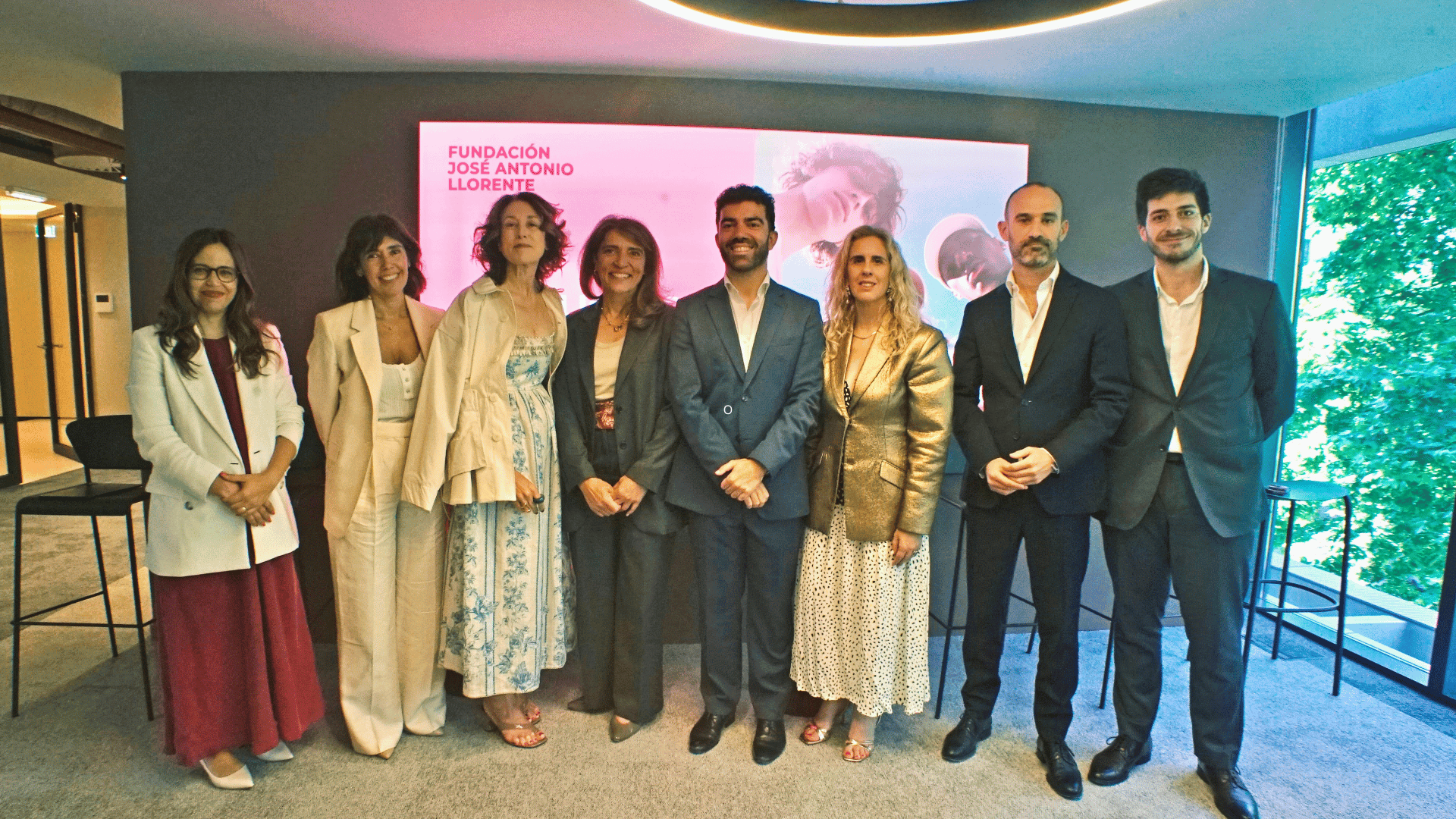
Alongside Francisca Magano (UNICEF), Cláudia Mendes Silva (Women in Tech), Diogo Madeira da Silva (Huawei), and Luísa Ribeiro Lopes (.PT), we reflected on the impact of AI on Generation Z’s well-being and the urgency of building a more equitable digital ecosystem. The conversation raised different core areas to understand and manage youth’s relationship with new technological tools:
The mirage of neutrality and the gender gap
Technology is not neutral; it is a reflection of those who program it. Cláudia Mendes Silva (Women in Tech) and Luísa Ribeiro Lopes highlighted a dangerous and representative imbalance:
– Algorithmic biases: Currently, women represent only 22% of the tech ecosystem. As a result, algorithms are adopting historical biases: they recommend social sciences to girls up to 3 times more often, while directing boys toward engineering fields twice as frequently.
– “Artificial Fraud Syndrome”: It has been detected that young women have a greater tendency to perceive the use of AI as “cheating,” a psychological phenomenon that undermines their confidence and limits their development in technical areas.

AI as a “digital tutor” vs. emotional disconnection
Generative AI presents a complex duality in the socioeconomic environment of young people. Francisca Magano (UNICEF) pointed out that, for youth in vulnerable contexts who cannot afford private tutoring, AI has become a highly accessible “digital tutor.” However, critical risks exist:
– Artificial emotional refuge: There is deep concern that children and adolescents are turning to AI chatbots at the first sign of anxiety, seeking a “serene and friction-free” relationship that pulls them away from the reality of conflict, frustration, and the human empathy necessary for their development.
– The danger of technological fascination: Luísa Ribeiro Lopes warned about the false belief that a “digital tutor” can replace the role of teachers. AI tends to tell young people what they want to hear; true education demands supervision and human community.
Early literacy and the “Adult Mirror”
Faced with debates about banning the use of technology or social media before the age of 16, the panel agreed that restriction without education is not the way out.
– Digital Emotional Intelligence: It is not about teaching a 6-year-old how to use ChatGPT, but about instilling that the respect and empathy of the physical world must also exist on the internet.
– Learning families: A large part of childhood digital anxiety stems from parents’ lack of literacy. The solution involves honesty: adults must admit their lack of knowledge and ask adolescents to explain how they use these tools. This not only educates the adult but also reveals the young person’s emotional state.

From bureaucracy to agile collective action
Public policies on paper are not enough and usually arrive late to the technological revolution. Diogo Madeira da Silva (Huawei) emphasized that the private sector and social organizations have the necessary agility to create real impact today:
– Initiatives such as awarding 50% of tech scholarships exclusively to women—which resulted in a massive and nearly equal response in applications (47%-52%)—prove that when barriers are actively broken down, talent responds.
Conclusions
– Digital Emotional Intelligence: We must transition from teaching purely technical skills to instilling human values (empathy and respect) and critical thinking from a very early age.
– Representativeness by design: To prevent AI from amplifying social and gender inequalities, it is vital to integrate diversity into the teams developing these technologies. We cannot design ethical tools with homogeneous teams.
– The human factor is irreplaceable: Technology is an excellent academic support tool (especially to combat material digital exclusion), but emotional comfort, validation, and the guiding role must remain in the hands of parents and teachers.
– Agile alliances: The digital ecosystem demands moving from long bureaucratic planning to rapid execution through direct public-private collaboration with school communities.