The Double-Edged Sword of Social Media: Strengthening Friendships While Undermining Self-Esteem
-
DateApr 27 2026
In the digital ecosystem, where 1.3 billion adolescents browse daily, the terms “positive” and “negative” are no longer mutually exclusive—they have become increasingly compatible.
The report “Diverse platforms, diverse effects,” presented by the University of Amsterdam and Utrecht University, concludes that social media has a dual impact on the mental health of adolescents between the ages of 14 and 18. For many young people, the same app can serve as a bridge that connects them to their friends while simultaneously acting as a mirror that makes them question their self-image.
Over Half of Young People Suffer Negative Effects
60% of adolescents experience predominantly negative effects on their well-being and self-esteem as a result of using social media platforms. Interestingly, within this harmful context, some teens are having paradoxical experiences: 1 in 7 users (13.7%) experience benefits in some dimension of their mental health, confirming the inherent duality of these platforms.
What Is Causing This Duality?
Social media is fulfilling its social function (improving bonds and closeness), but at the same time, it is taking a toll on mental health. Given this dilemma, the question lies in which elements are responsible for this coexistence of positive and negative effects.
Platform Design: A Determining Factor
The purpose of each social network, combined with how youth use it and the design tied to user experience, are decisive factors that condition the impact on the mental health and well-being of young people.
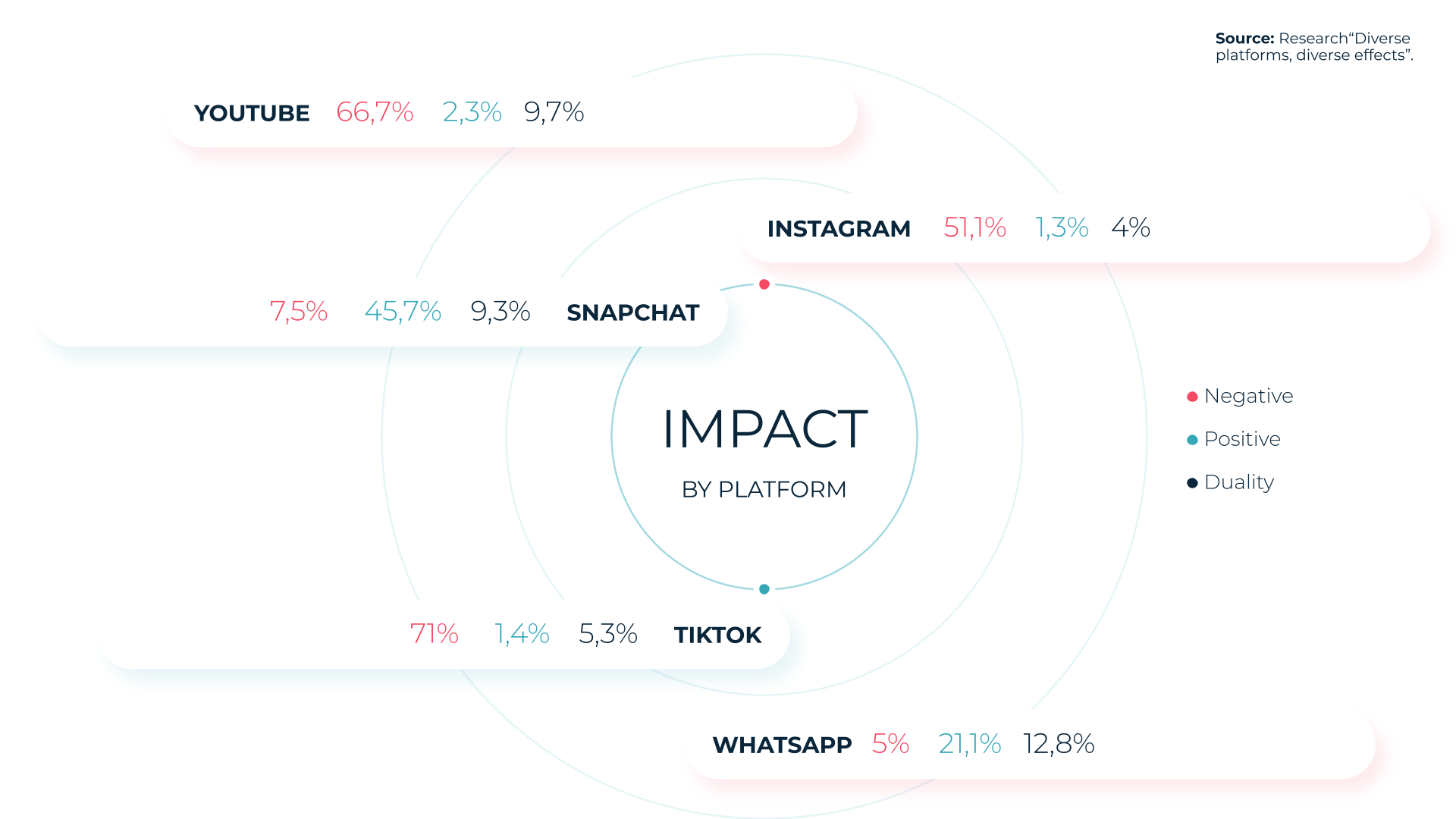
Connection Platforms (WhatsApp and Snapchat): These have neutral or even positive effects. Snapchat improves well-being and closeness among friends, while WhatsApp has a notably positive impact on strengthening friendship bonds without damaging self-esteem.
The Key Reasons:
– Design focused on private communication.
– Interaction with contacts, friends, and acquaintances.
– Encourages genuine connection.
– Limits risks such as social comparison and overexposure to content.
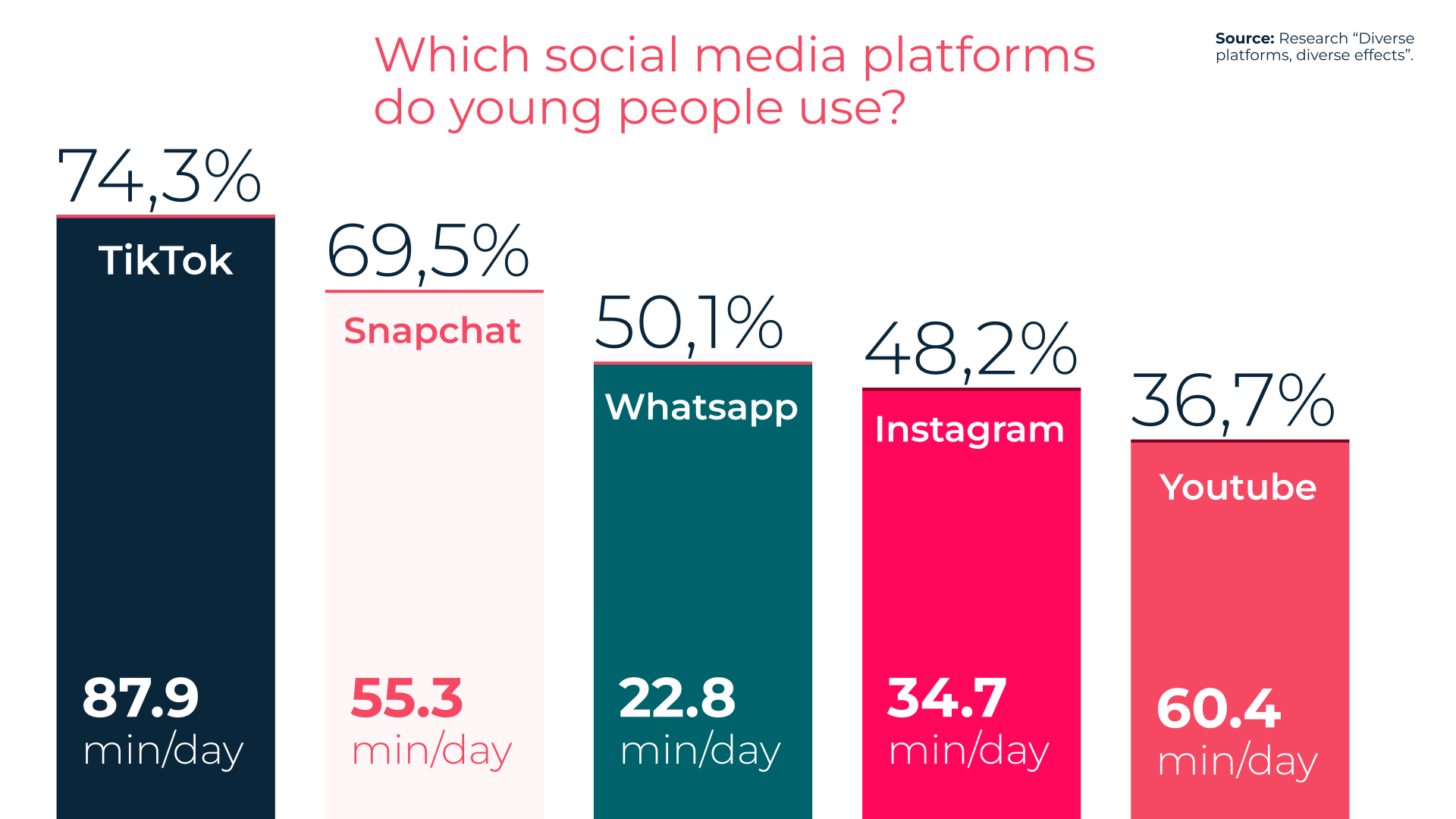
Exposure Platforms (TikTok, Instagram, and YouTube): Their infinite scroll design and retention algorithms encourage social comparison. On TikTok, for example, two out of every three users who engage in constant, passive consumption feel this impact across all dimensions of their lives. The challenge here lies in becoming an active user rather than remaining a passive spectator.
The Key Reasons:
– Uncontrolled idealization and aspiration.
– Algorithms that increase exposure to curated content.
– Design intended for maximum retention.
Personal History Matters
This duality also depends on our previous emotional baggage. A clinical study in the UK, conducted on a sample where 1 in 4 young people aged 17 to 19 has a probable condition, reflects that the brain processes exposure according to its vulnerability
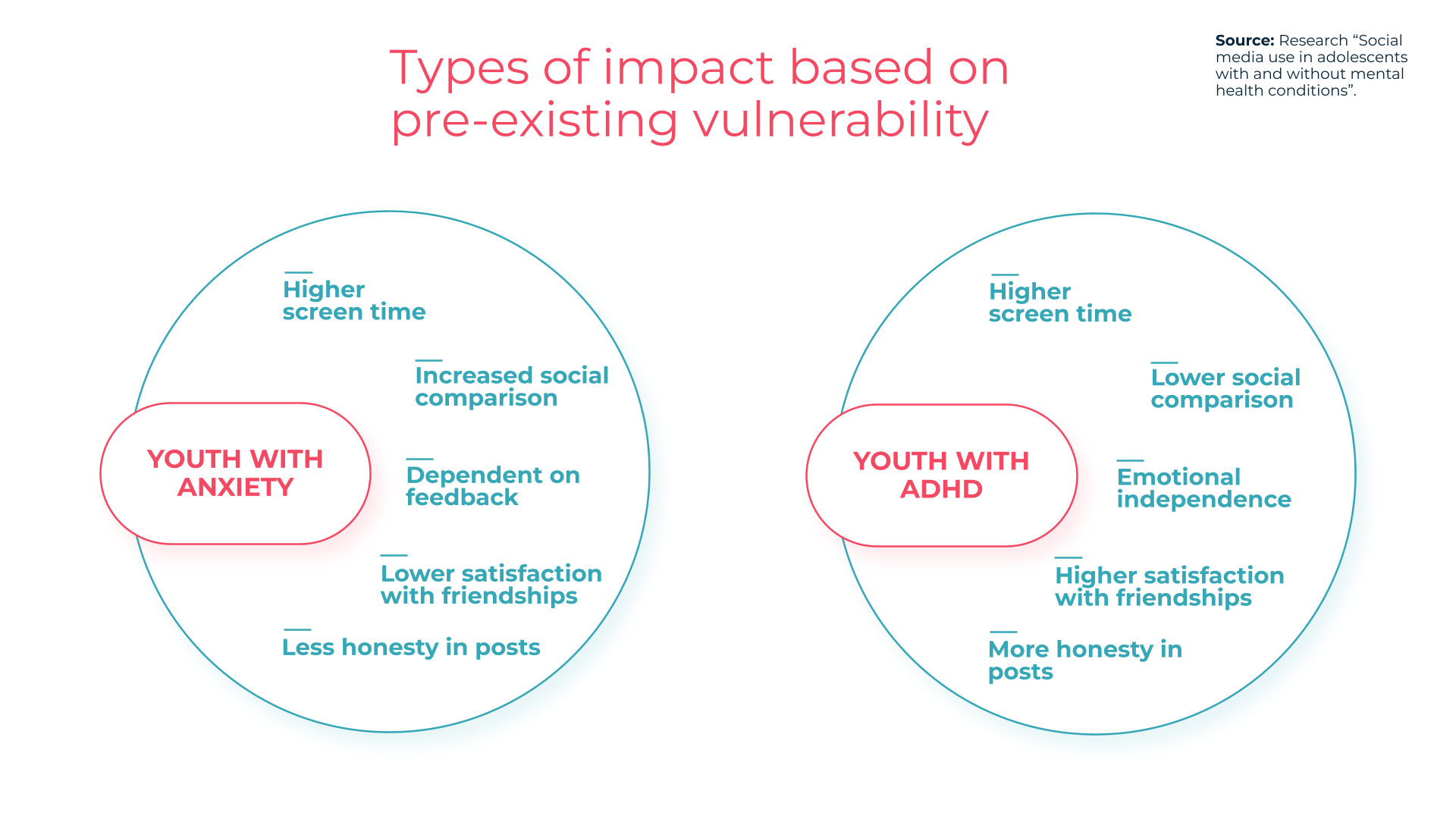
– Youth with anxiety or depression are more likely to get caught in the search for validation (likes). For them, the impact of a comment is much deeper than in the physical world.
– On the other hand, youth with ADHD, although they spend more time online, tend to be more resilient to social comparison.
“Scrolling” lowers the mood; sending a direct, honest message boosts it. Digital mental health depends on moving from being an object of the algorithm to being a subject of communication.
What Should We Do?
The great lesson of duality is that we must stop counting minutes and start evaluating experiences. The solution is not disconnection, but digital literacy.
Opportunities for a Healthy Future:
– Regulation by Design: Support laws that eliminate addictive features like autoplay.
– Reciprocal Use: Encourage using networks as tools for dialogue, not just consumption.
– Prior Awareness: Teach young people to identify how they feel before opening an app to prevent the network from acting as an amplifier of their distress.
Duality teaches us that social media is an extension of our social lives. With the right guidance and a more human design, we can tip the scales so that technology becomes, above all, a driver of well-being and closeness.