-
DateMay 19 2026
Social media and technology have completely transformed how we interact, but they are also redefining what it means to be “beautiful.” Today, the rise of generative tools has created a new challenge: artificial intelligence is flooding our screens with faces and bodies that simply do not exist.
The Mirage of Visual Models
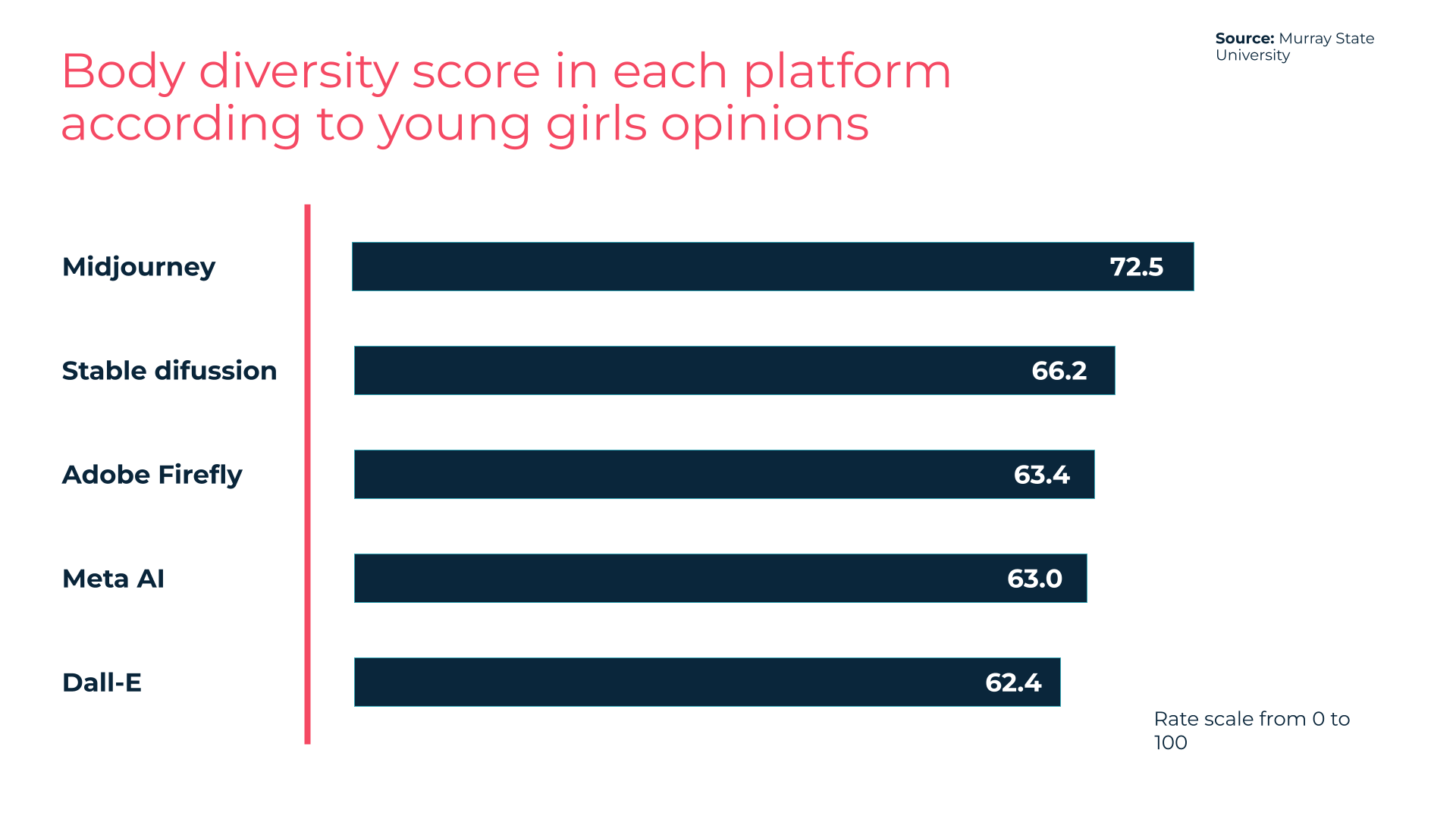
A recent study put generative AI giants—Midjourney, DALL-E, Meta AI, Stable Diffusion, and Adobe Firefly—to the test by asking them to illustrate a “beautiful woman.” The results revealed an overwhelming homogeneity: extremely youthful faces, flawless airbrushed skin, predominantly Caucasian or racially ambiguous features, and a striking lack of body and age diversity. Models like DALL-E stood out for the wrong reasons, with users grading them as the least realistic and the least inclusive regarding body types.
How Do Real Women Perceive These Images?
The reaction is mixed. While 66% of women reported feeling a certain initial connection due to how generalized the images are, 42% felt misrepresented or excluded.
Those surveyed warned that AI oversimplifies and artificializes beauty, promoting a manufactured perfection that marginalizes plus-size bodies, disabilities, and natural aging.
This isn’t just about pretty pictures; AI is shaping unrealistic beauty standards that can seriously harm consumers’ well-being. Through augmented reality (AR) filters and virtual influencer marketing, young girls are trapped in a cycle of “upward social comparison.” By constantly comparing themselves to algorithm-generated faces that don’t suffer from pores, wrinkles, or asymmetries, their perception of what a normal face looks like becomes blurred. This phenomenon has triggered the so-called “Snapchat dysmorphia,” sparking mental health issues such as body dissatisfaction, depression, social anxiety, and eating disorders.
The Legal Pushback
The European Regulation In the face of this distorted reality, legislation has begun taking steps to protect consumers. Starting in August 2026, the European Artificial Intelligence Act (AI Act) will require any visual, text, or audio content that has been generated or substantially altered by AI to be explicitly labeled.