
AI and Employability: While Youth Face the Future with Fear, LinkedIn Teems with New Job Openings
-
DateApr 27 2026
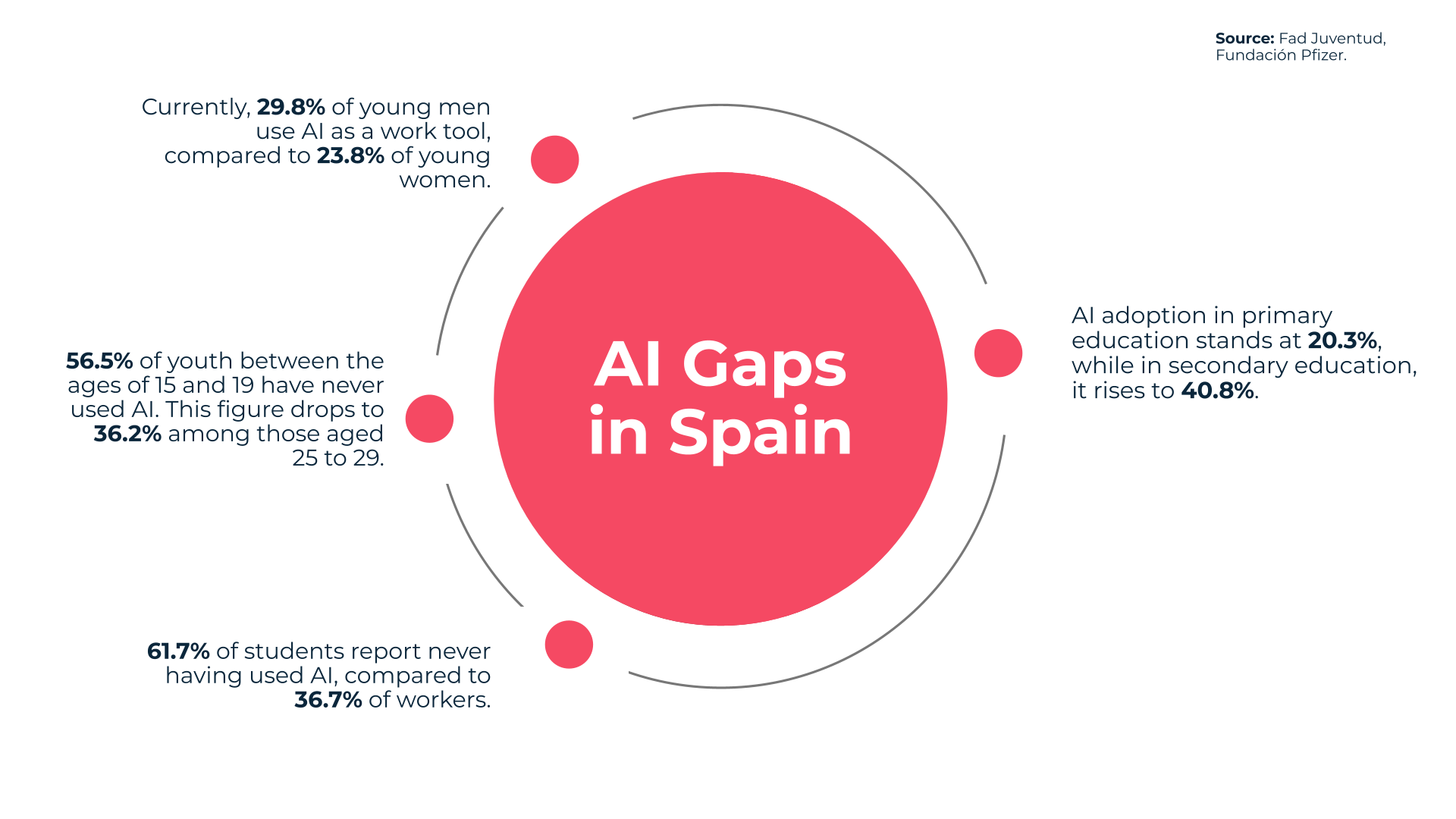
Artificial intelligence is advancing at a breakneck pace, transforming how we learn, interact, and, most importantly, work. However, we face a paradox: even though AI is on everyone’s lips, nearly half of young people between 15 and 29 (46.7%) claim they have never used a tool of this kind.
The adoption of AI is not happening uniformly. In this context of uncertainty and hesitation toward changing times, a question arises: are young people ready to play a role in the new reality of the labor market?
The Classic Fear of the Unknown
The emergence of AI has created a climate of uncertainty, especially for those about to make the leap into the professional world. Gen Z is, in fact, the demographic showing the greatest concern about their professional future in the face of automation.
Data shows that 22.7% of young people fear being replaced by these technologies, a figure higher than that of previous generations. The perception among youth is sharply divided:
– On one hand, 28.6% are fully confident that humans will remain irreplaceable in tasks requiring creativity or emotional empathy.
– On the other hand, 28.5% are aware of an undeniable reality: those who do not adapt to these new technologies risk being left behind in the job market.
The Benefits of AI
Despite the initial apprehension, the data invites optimism. Automation is not destroying jobs on a massive scale; instead, it is redefining tasks so professionals can focus on higher-value work. In fact, only 14% of companies have replaced temporary workers with automated solutions.
For the youth, AI represents an unprecedented development opportunity. Integrating this technology into daily academic and professional life yields spectacular results: 86% of higher education students already use it regularly.
The result? A 40% increase in labor productivity, allowing young people to work significantly faster and with higher quality.
The true added value is not just knowing how to use a tool, but developing critical thinking. Knowing how to craft the right questions (prompting), detecting algorithmic biases, and fact-checking sources makes a young professional highly competitive. We are entering the era of “new-collar” jobs—a new workforce that combines technical fluency with inherently human strengths like empathy and personal connection.
Yes, New Jobs Are Being Created
Far from eliminating opportunities, the AI revolution is multiplying them. Globally, LinkedIn data confirms that AI has already generated 1.3 million new jobs. Looking at Spain, projections for 2026 point to the creation of 480,000 positions in digitalization and sustainability.
And here is a hopeful statistic against academic pessimism: 68% of these new jobs do not require a university degree, with vocational training being sufficient.
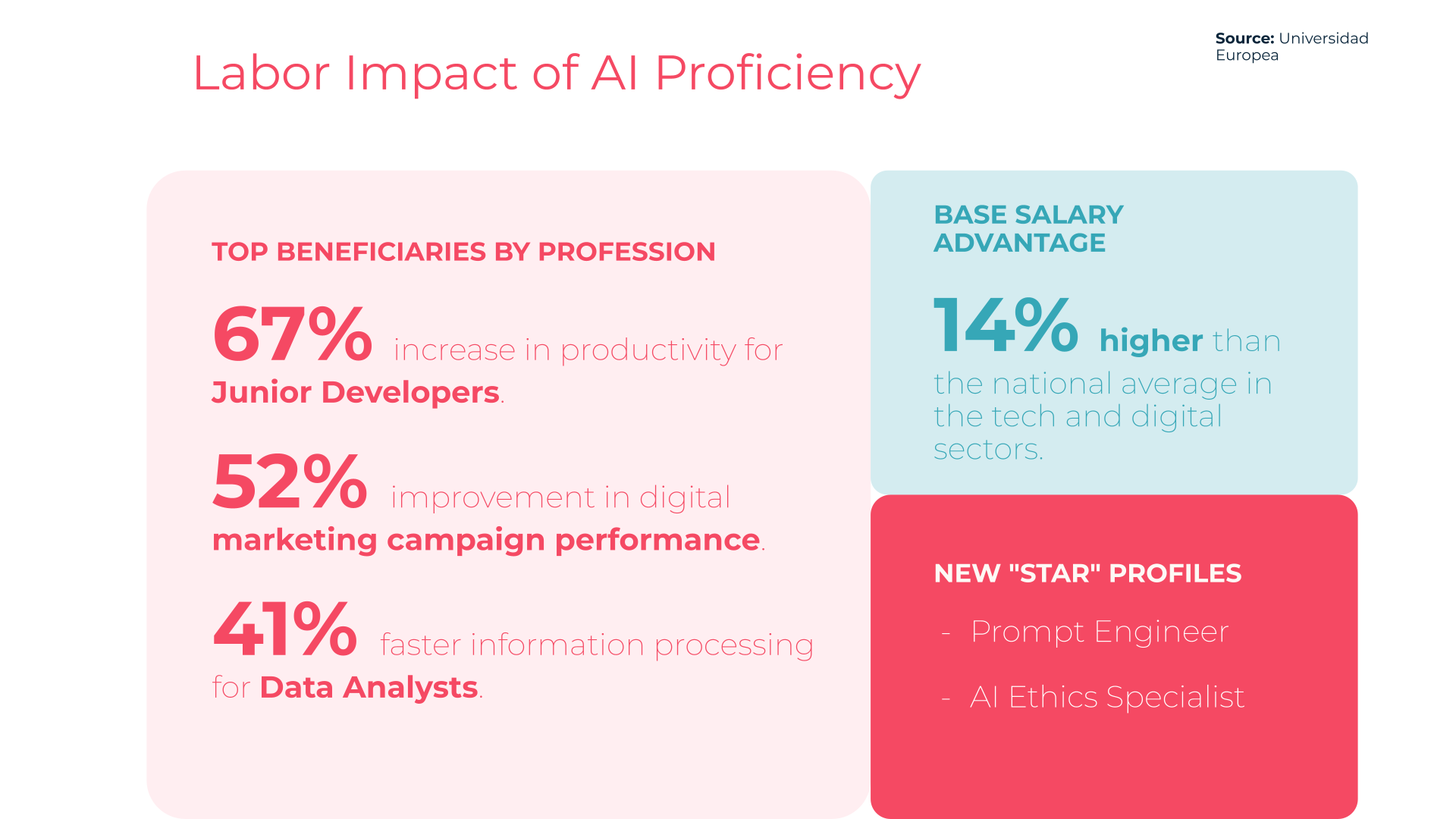
Exciting and highly-paid profiles are emerging (with salaries 14% above the national industry average). We are seeing demand for Prompt Engineers, AI Ethics Specialists, and even unique roles like the “AI Bully”—professionals hired specifically to test the limits and patience of chatbots.