-
DateFeb 4 2026
Teenagers in Mexico spend an average of 8 to 9 hours a day interacting with screens, more time than they spend sleeping or at school.
Given this context of excessive use, we must understand what factors are driving it and how we can find solutions.
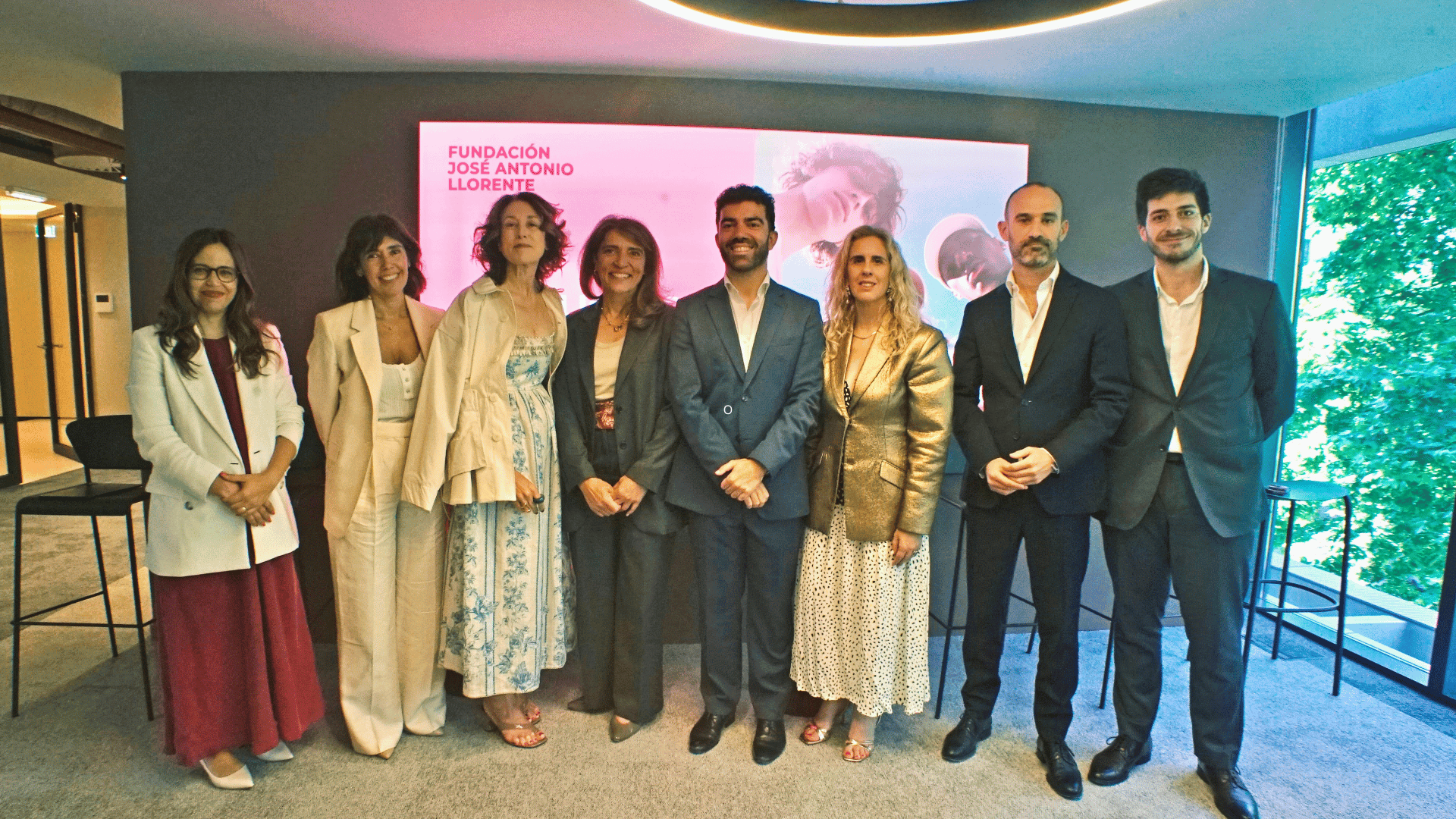
Together with CONCIEO, a Mexican organization dedicated to preventing addiction among young people, Ana de Saracho, founder of SynerTICS, and Isabel de la Torre, “La Bala”, reflect on this issue.
The conversation raised different points for understanding and managing young people’s relationship with the digital world:
The adolescent brain versus the algorithm
The “Attention Economy” does not seek to sell products, it seeks to capture time. Ana de Saracho (SynerTICs) highlighted a dangerous biological imbalance:
– The design trap: Algorithms are designed for instant gratification.
– Biological vulnerability: The prefrontal cortex of the brain (responsible for judgment) does not mature until age 25. Asking a teenager to self-regulate in the face of massively persuasive AI is an uneven battle.
The adult mirror and “Digital Care”
Tania Jiménez (CONCIEO A.C.) sent a direct message to parents: digital education begins with self-criticism.
– Consistency: You cannot demand disconnection if adults live in a digital rush (such as listening to audio at 1.5x speed).
– Meaningful limits: Banning cell phones without offering an attractive alternative in the offline world (socializing, sports, art) does not work. The digital void must be filled with real presence.

The Voice of Generation Z: How to Protect Yourself
Isabella de la Torre “La Bala,” a singer and content creator since the age of 11, shared her perspective from the point of view of someone who has grown up under public scrutiny.
– The myth of perfection: Isabella spoke about the pressure for external validation and how comparing oneself to “perfect” lives on social media damages self-esteem.
– Survival strategy: She shared her personal “layering” method:
-
- Differentiating between public life (what she is willing to have criticized) and personal/private life (her real emotions), a distinction that many teenagers today do not know how to make.
Regulation or Education?
Faced with laws seeking to ban social media for minors under 16, the panel reached a consensus:
“Regulation is a necessary safety measure, but it is insufficient if there is no emotional education behind it.”
If a young person reaches the age of 16 without basic tools and knowledge, they will be just as vulnerable even if the law allows them to enter the digital world. The key is autonomy, not just restriction.
The new frontier: Artificial Intelligence
Generative AI is not only changing how we work, but also how we feel:
– Emotional security: There is concern that young people are seeking validation in AI chats rather than in human relationships.
– Crimes of ignorance: There is a lack of awareness about the legal seriousness of creating deepfakes or fake images of peers, confusing it with “digital mischief.”

Conclusions
– From the “Attention Economy” to the “Time Economy”: Companies and governments must begin to value quality time. The opportunity lies in designing technologies that bring us back to real life quickly, rather than keeping us stuck in the digital world indefinitely.
– Digital Hygiene as a Basic Skill: Just as we learned physical or road safety, “Digital Hygiene” must be integrated into school and work curricula. This includes:
-
- Conscious Disconnection: “Screen-free” spaces and times by design.
- Digital Literacy: Understanding how biases and AI work so as not to be manipulated by them.
– Nurturing the more human side: The great opportunity is to use technology for what it is good at (productivity, information) and reclaim for humans what is ours: comfort, empathy, and emotional validation.
– Legislation as an opportunity: We must take advantage of the current regulatory momentum (such as laws in France or Spain) not only to prohibit, but to compel platforms to be transparent and safe by default for minors.
It’s not about how many hours we spend connected, but what we are not doing while we are connected. The goal is to move from passive concern to active engagement.