
Life in the Digital Display Window: How Is “Sharenting” Affecting Children and Their Online Safety?
-
DateOct 26 2026
There was a time when showing off pictures of your kids or grandkids meant pulling out the family photo album on the living room coffee table when company came over. Today’s youth are the first generation in history whose lives begin leaving a digital footprint before they are even born. Ultrasounds, first steps, birthday parties, family vacations, or the first day of school are blasted out in seconds to audiences that can easily reach into the thousands.
This practice—dubbed “sharenting,” a portmanteau of share and parenting—has become so normalized in our daily routines that we rarely stop to gauge its true scope. However, a recent report by Aldeas Infantiles SOS (Growing Up in the Digital Display Window, September 2026) shines a spotlight on a nuanced, complex reality: behind a parent’s well-meaning post lie critical questions about privacy, identity development, and child safety.
Spain Leads Europe in Digital Overexposure
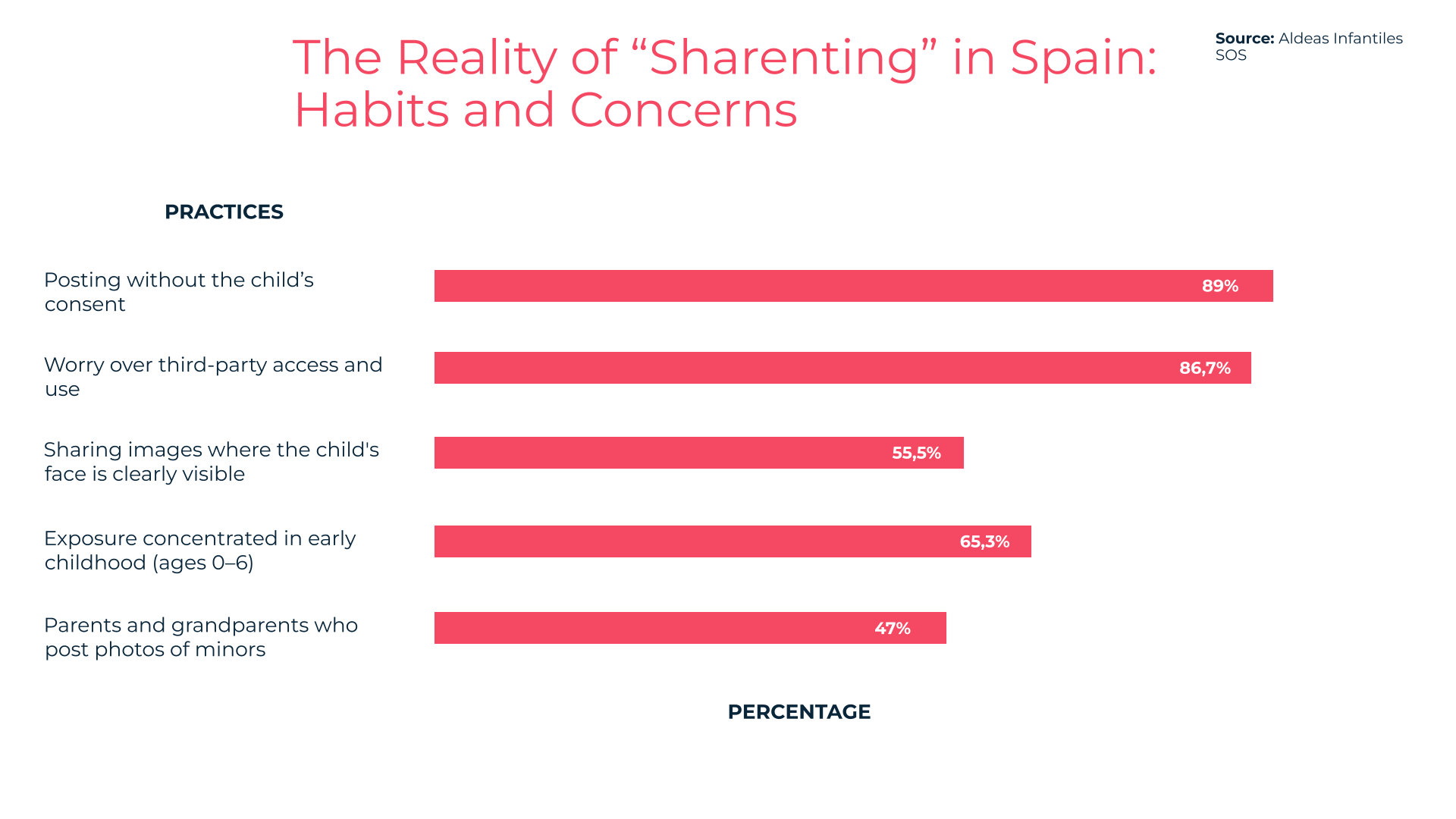
The quantitative data uncovered by the investigation reveals a striking landscape. Nearly half of Spanish parents and grandparents (47%) routinely post photos of underage children and grandchildren online. What’s more, this exposure is far from evenly spread: 65.3% of that digital footprint is concentrated in early childhood—the first six years of life—when a child has zero capacity to understand or consent to the use of their likeness.
Spain ranks as the European country where sharenting is practiced most aggressively: one in four families (25%) does it multiple times a year, outpacing the European average of one in five (20%).
Yet, the practice exposes a glaring social paradox: 86.7% of families admit they worry about these pictures ending up in the hands of strangers, yet 55.5% continue to post photos where the child’s face is clearly identifiable (compared to 44.5% who blur, pixelate, or crop images to obscure identity). Furthermore, an overwhelming 89% of families share this content without asking the child’s permission or weighing the legal and emotional fallout. Nor does this overexposure stop with parents: 40% of grandparents never ask the parents for permission before uploading pictures of their grandchildren to the web.
When it comes to the primary channels Spanish families use to share these photos, WhatsApp takes the lead (48.9%), followed by Facebook (24.5%) and Instagram (22.8%).
What Drives Us to Post? The “Display-Window Society”
To understand sharenting, it is vital to steer clear of knee-jerk blame: the vast majority of families aren’t acting out of malice. Surveys gathered by Aldeas Infantiles SOS reveal that these motivations stem from core human needs: connection, celebration, and staying in touch with loved ones.
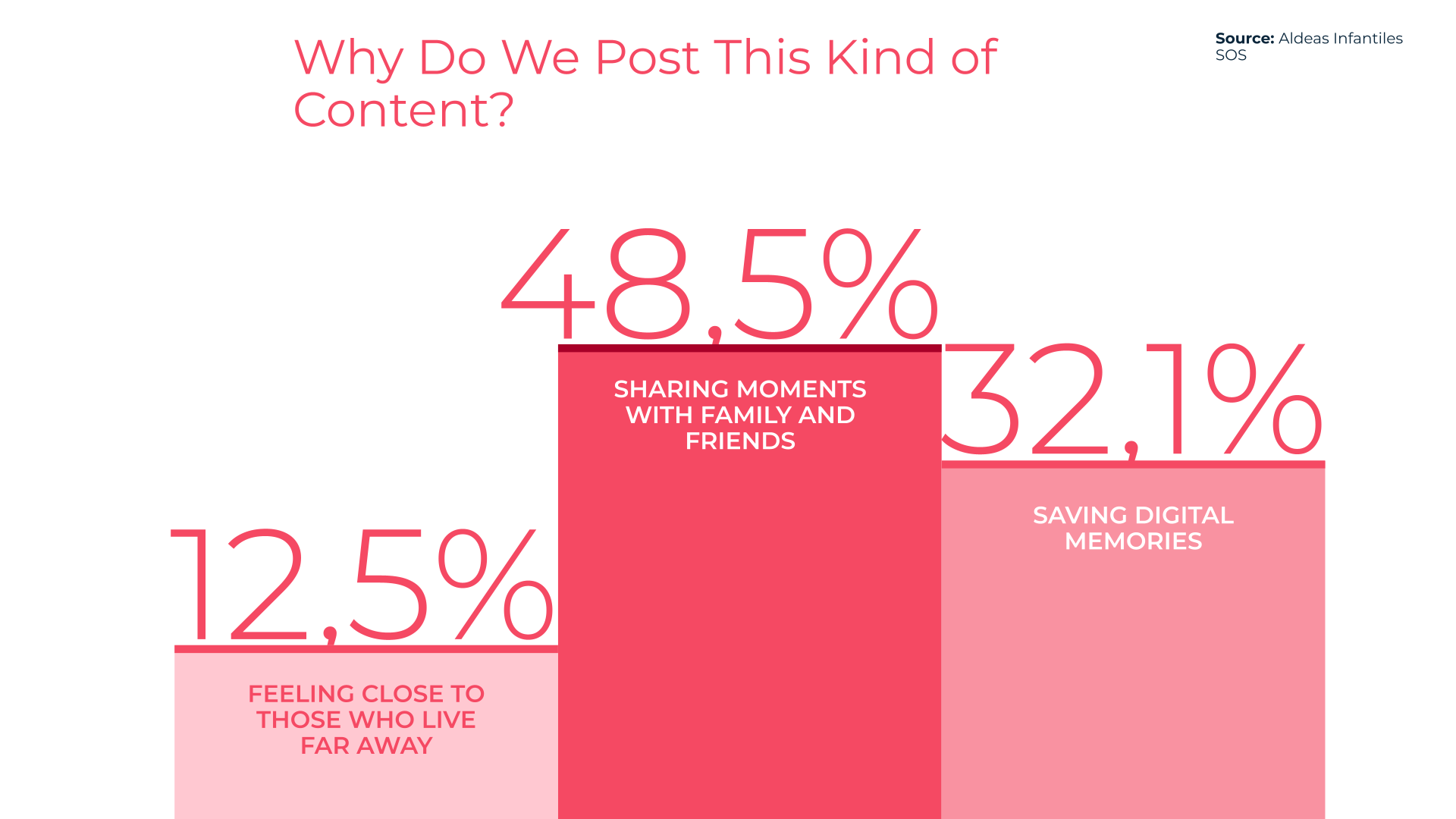
Yet experts warn of emerging cultural and emotional drivers. We live in what psychologist Mercedes Bermejo terms a “display-window society,” where instant gratification takes center stage and our most intimate moments are commodified into content. The urge to chase external validation through likes, coupled with the unintended isolation and loneliness that often accompanies modern parenting, leads adults to project their child’s image as an extension of their own ego. This can end up undermining the self-esteem of both parent and child when personal worth becomes tethered to the gaze of outsiders.
Algorithms and the “41% Effect”
The report emphasizes that this overexposure does not happen in a vacuum—it unfolds within a digital ecosystem engineered to monetize human attention. Big tech platforms actively boost family-oriented and emotionally charged content:
-
Higher Social Reach: According to a study by the University of the Basque Country, posts by mom influencers (“momfluencers”) featuring children receive an average of 41% more likes than posts without kids.
-
Constant Exposure: In 61.7% of the posts analyzed from momfluencer accounts, one or more children appear—predominantly kids under the age of 5.
-
Algorithmic Bias: Recommendation feeds are coded to reward videos packed with high emotional intensity, temper tantrums, or embarrassing moments, turning childhood vulnerability into premium, highly consumed content.
Real-World Risks: From Everyday Chat Stickers to “Level 0” Material
Beyond the ethical debate, the study details tangible threats triggered by an early digital footprint:
-
Impact on Identity Formation: Privacy is the sacred, internal space where a child learns self-awareness and figures out the difference between who they actually are and what they do to please others. Turning childhood into a 24/7 public spectacle gives external scrutiny outsized power, stunting healthy emotional autonomy.
-
Cyberbullying and Rogue Stickers: An innocent, goofy snapshot shared in a family chat can easily be ripped, turned into a custom sticker or meme, and weaponized for bullying in school group chats.
-
The “Level 0” Danger Online: Among the most chilling findings in the report is a University of Valencia study analyzing files seized from convicted sexual predators: 72% of the images discovered on their devices were classified as “Level 0” material—meaning completely everyday, innocent, non-sexual photos of children pulled directly from public social media profiles or family group feeds. This is further aggravated by the rise of generative AI tools used to manufacture non-consensual deepfakes or illicit composites.
-
Behavioral Profiling and Hidden Data: A run-of-the-mill “first day of school” or birthday snapshot gives away GPS tags, daily routines, school names, and socioeconomic status through metadata and AI-driven predictive profiling—constructing a persistent advertising and psychological dossier on a child starting right in the cradle.
Takeaways and Actionable Steps for Families and Classrooms
Under the Spanish legal framework, the Data Protection Act (LOPDGDD) sets the minimum age of digital consent at 14 years old (prior to that, legal custody and data control rest entirely with parents or guardians). Furthermore, the Spanish Data Protection Agency (AEPD) operates a Priority Channel to scrub sensitive or compromising content off the web, boasting a 95% success rate in under 72 hours.
Still, the strongest shield is prevention and teaching digital privacy by example. Before hitting upload, families and educators should run through this checklist:
-
Does this post actually benefit the child?
-
Could this embarrass, haunt, or harm them ten years from now?
-
Am I sharing something that belongs strictly in their private life or medical history?
-
Would they want this photo floating around online when they are a teenager?
-
Have I asked for their input and honored their answer if they are old enough to communicate (typically ages 3 and up)?
Protecting kids in the digital age does not mean enacting a blanket ban on technology; it means remembering that the family unit must once again become a protected haven of safety and privacy. Before you tap “share,” remember: being fully present and looking our children in the eye will always be worth infinitely more than any fleeting double-tap or like.