
Neither Romances nor Friendships: The U.S. and China Launch Legal Offensives to Rein In AI Chatbots
-
DateOct 26 2026
In the United States, artificial intelligence regulation has taken a radical turn. For years, the legislative debate centered on how models were trained or on mandating bare-bones disclaimers stating that users were interacting with a bot.
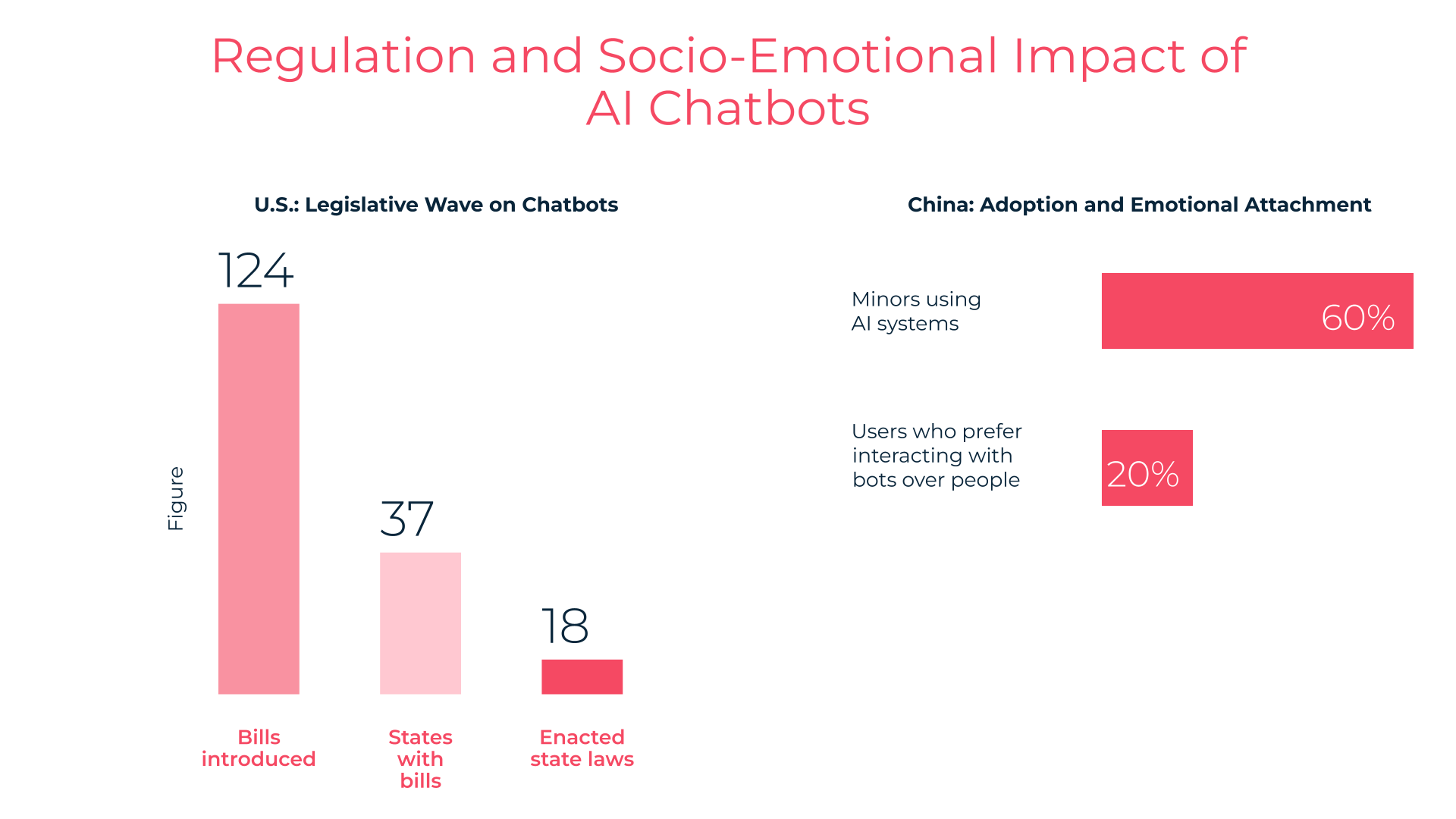
Today, however, the spotlight has squarely shifted toward regulating the interaction itself and the relational behavior between chatbots and users. Driven by mounting concerns over child safety and in the wake of high-profile lawsuits, a total of 37 states introduced 124 chatbot-related bills in 2026, bringing the tally of enacted state laws to 18 between 2025 and 2026.
The primary thrust of U.S. efforts zeroes in on shielding minors from emotional dependence and manipulative design. The new statutes explicitly bar chatbots from simulating romantic relationships, heaping on excessive flattery to foster attachment, or guilt-tripping users when they try to log off or end the conversation.
Furthermore, trailblazing legislation such as California’s SB 1119 mandates protective default settings—like capping continuous sessions at one hour or disabling persistent conversational memory—while barring these tools from masquerading as licensed mental health professionals.
Alongside curbing artificial attachment, American legislation prioritizes mandatory crisis-response protocols, requiring bots to flag signs of self-harm, suicidal ideation, or eating disorders and route users to immediate help resources, such as the 988 Suicide & Crisis Lifeline. Through these measures, lawmakers are pushing to stay ahead of the curve, determined not to repeat the regulatory lag that once plagued social media oversight.
China Pushes for AI “Celibacy”
Half a world away, China offers a complementary yet considerably more heavy-handed playbook, becoming the first country in the world to officially ban AI “virtual partners or family members” for minors under 14 without explicit parental consent. Beijing’s regulatory framework forces platforms to bake in recurring disclaimers about the bot’s synthetic nature, implement screen-time limits, and grant legal guardians full access to chat logs.
This hardline stance from Beijing stems from alarm over domestic studies revealing that 20% of young AI users confessed to preferring conversations with chatbots over real flesh-and-blood people. Yet it also intersects with a sweeping national challenge. Analysts point out that cracking down on synthetic emotional bonds dovetails with the government’s broader push to fight its severe demographic crisis—marked by a population drop of 3.39 million and a plunge in births to 7.92 million in 2025. By doing so, the state aims to safeguard mental health while actively nudging youth toward real human connection, dating, and family formation.
Ultimately, the world’s two superpowers share common ground on one crucial front: conversational AI can no longer be treated as a glorified search engine or a mere productivity tool, but rather as an affective interface carrying profound socio-emotional fallout.