
Educational Ally or Easy Shortcut? The New ChatGPT for Teens Headlines a New Era of Digital Literacy
-
DateAug 27 2026
The role of generative artificial intelligence among young people has been surrounded by a constant dilemma: how can we prevent technology from replacing students’ own effort without stripping them of a key tool for their future?
OpenAI has stepped up to address this concern with the global rollout of ChatGPT for Teens—a tailored configuration designed for minors aged 13 to 17 that reshapes the rules of the game in education, online safety, and emotional well-being.
From “Copy-Paste” to Real Learning
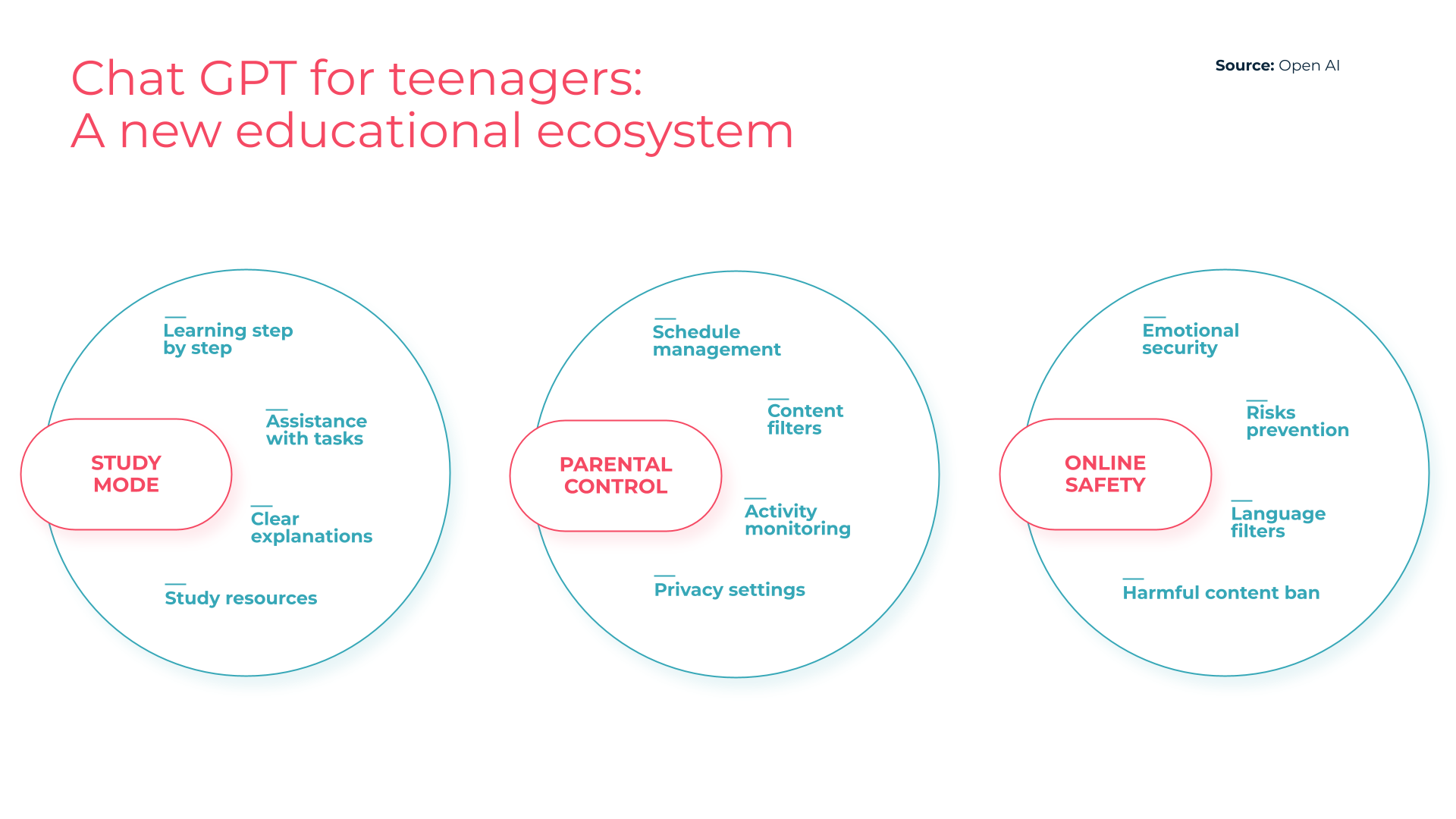
The major innovation of this release lies in shifting the chatbot from a quick-response engine into a Socratic tutor. Through the new Study Mode, the AI intentionally introduces pedagogical friction into the inquiry process.
– Scaffolding-Based Learning: Instead of instantly solving a math problem or writing an essay from scratch, the tool breaks problems down step by step, asking guided questions and testing the teen’s comprehension.
– Responsible Homework Reminders: The system can detect when a user is trying to take an easy shortcut and automatically redirects them toward active problem-solving dynamics and self-reflection.
– AI Literacy Powered by CodeAI: To boost critical thinking, OpenAI partnered with CodeAI to supply resources that help teachers and students question AI-generated outputs and spot when a system ceases to be reliable.
Privacy and Safety: An Emotional Shield
Safety goes far beyond traditional content filters targeting self-harm, violence, or eating disorders. This release firmly tackles attachment and emotional dependency:
– Limits on Simulated Humanity: ChatGPT has explicit instructions to avoid affective or romantic language, refrain from pretending to possess feelings or consciousness, and issue regular reminders that it is, in fact, a machine.
– Respectful Parental Controls: Parents can link accounts to set up Quiet Hours or enable the pedagogical Study Hours mode by default. However, minors’ privacy remains protected, as guardians cannot read the content of their chats.
– Smart Age Detection: To keep safety measures from relying solely on fake birth dates, the system deploys a model that automatically estimates age using behavioral patterns and interaction styles.
A Shared Opportunity: Educators, Families, and Teens
This update sets the stage for a collaborative environment where every player in the educational community wins:
– For Teens: It offers the chance to develop guided digital autonomy. They learn to interact with technology confidently, grasping that AI is a tool to boost their abilities, not replace them.
– For Parents: It provides a flexible supervision framework that supports teens through their digital maturity. It enables healthy study routines without invading their privacy or monitoring their chats.
– For Educators: While OpenAI clarifies that ChatGPT for Teens is meant for independent support outside the classroom, this breakthrough makes teachers’ jobs easier. By discouraging automated academic shortcuts, it narrows the gap between homework and true classroom knowledge assessment.