
-
DateJun 29 2026
The digital reality of teenagers has a direct impact on their well-being. Constant hyperconnectivity has transformed their day-to-day lives, creating an environment where the virtual often displaces the physical—or even becomes indistinguishable from it. In countries like Mexico, young people spend an average of 8 to 9 hours a day interacting with screens, a longer period of time than they spend sleeping.
This total immersion is taking a toll on their digital well-being: in Spain, one in four young people experiences cyberbullying, establishing itself as the leading cause of their emotional distress, while over 60% of teenagers in Portugal report suffering from digital anxiety.
We are looking at a generation coexisting with extremely powerful tools that, while opening up a world of possibilities, also trigger deep fears about their personal safety and their very identity online. However, in contrast to this landscape that might seem dominated by tech anxiety, young people are proving to have a level of maturity and a critical thinking capacity that is much sharper than society usually gives them credit for.
The fact is that this very youth, hyperconnected and exposed to the complexities of the internet, adopts a responsible stance inside the classroom. The study “Navigating AI in Education,” by the University of Oxford, reveals that Generation Z is enthusiastic about the impact of Artificial Intelligence on education and demands more technological guidance, but they argue that the role of the teacher is “irreplaceable.”
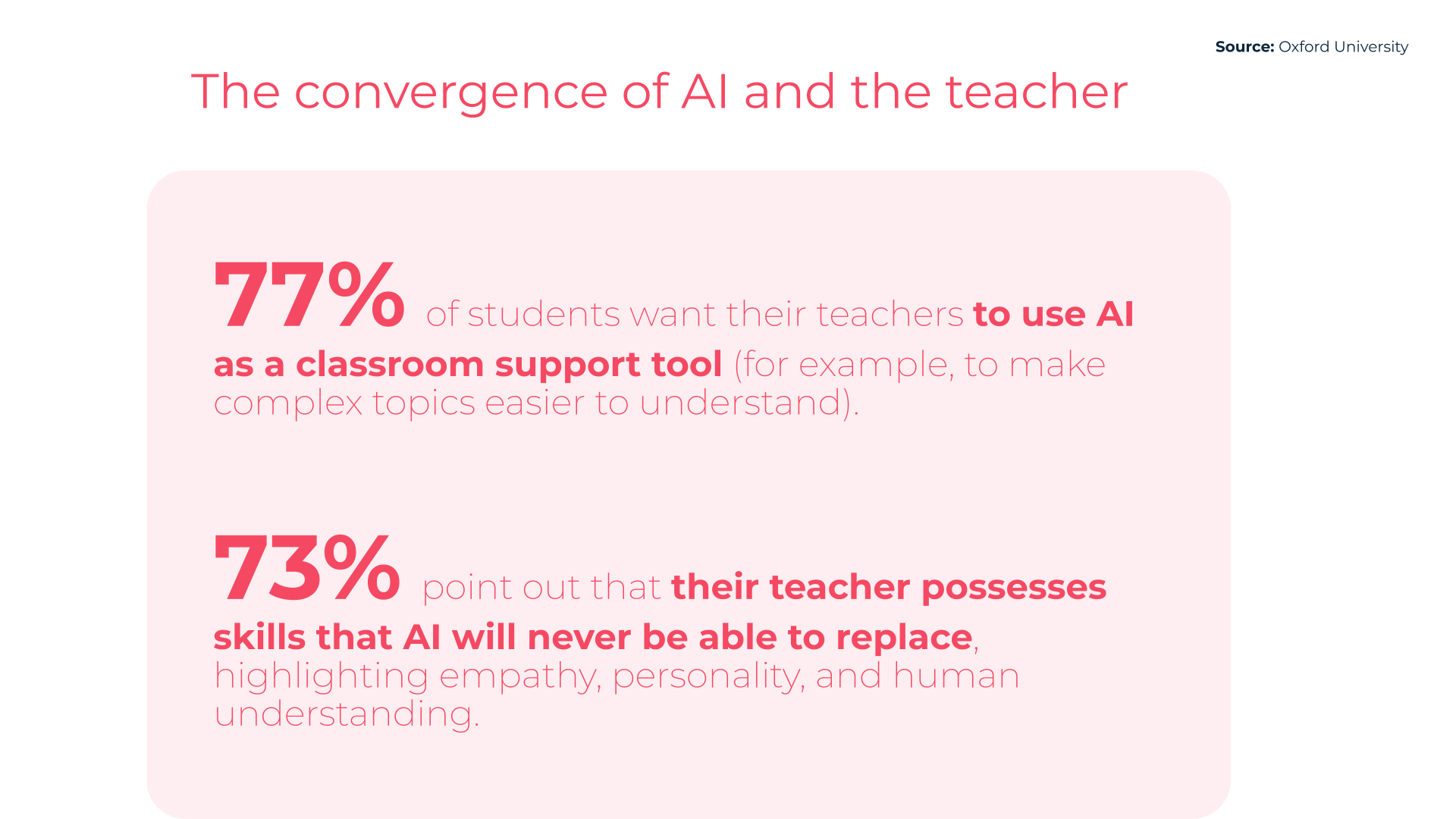
Students do not reject technology; in fact, 39% are more excited than worried about the impact of AI on their education, compared to only 16% who report feeling anxious. What young people are demanding now is not prohibition, but guidance. Only 15% state that they have received enough guidance from their schools on how to use these tools properly.
Young people want to develop their own genuine opinions without a robot making a “vague interpretation” of their thoughts, thereby avoiding losing the ability to learn on their own by relying too heavily on technology. This reality among youth in the UK makes us reflect on the importance of digital literacy. ¿Is it possible that young people in other countries are going through the same thing? ¿Will this be a trend that we will see across youth in general over the coming months?
That is why it is crucial to equip new generations with the tools and skills that ensure their well-being in a changing environment. The real challenge of our era is no longer connectivity itself, but technological humanism: ensuring that Artificial Intelligence serves to empower teenagers’ critical thinking. Youth has already proven its maturity; the responsibility to guide them is now in our hands.