
-
DateNov 25 2026
“It’s Just a Joke”
They started out as a digital pastime among gaming communities and absurdist humor groups on Facebook under the name curimomos. Yet in just a matter of weeks, “curis” have taken TikTok and Instagram by storm, becoming the new unspoken code in school hallways. They are small illustrations, comic panels, or crude edits that recreate everyday school situations and caricature the personalities of teachers and students.
At first glance, much of this content seems harmless and childish: jokes about scraping by on a test or parodies of teachers sneaking out for a smoke. The catch is that this lighthearted, seemingly funny aesthetic whitewashes and disguises serious patterns of harassment. Under the guise of humor, mockery stops being a fleeting remark on the playground and turns into a public showcase of ridicule targeting physical appearance, intelligence, or pushing sexist, homophobic, and xenophobic remarks.
The Mirage of Anonymity: A Wound That Never Heals
To fly under the radar of school administrators and parents, creators set up anonymous profiles where they spell school names backward, use abbreviations, or rely solely on the school’s crest. Although real photos or full names are rarely posted, the damage is surgical: slipping in a nickname, a homeroom number, or a specific anecdote is all it takes for the entire school community to immediately identify the target.
Unlike traditional schoolyard bullying, the digital footprint multiplies the psychological toll. These panels can be saved, forwarded, and circulated in an endless loop, preventing the humiliation from ending when the final bell rings. As UNICEF warns, cybervictimization among minors carries severe consequences: lower life satisfaction, heightened emotional distress, and a direct spike in the risk of suicidal behavior.
The Bully Sits at the Desk Next Door
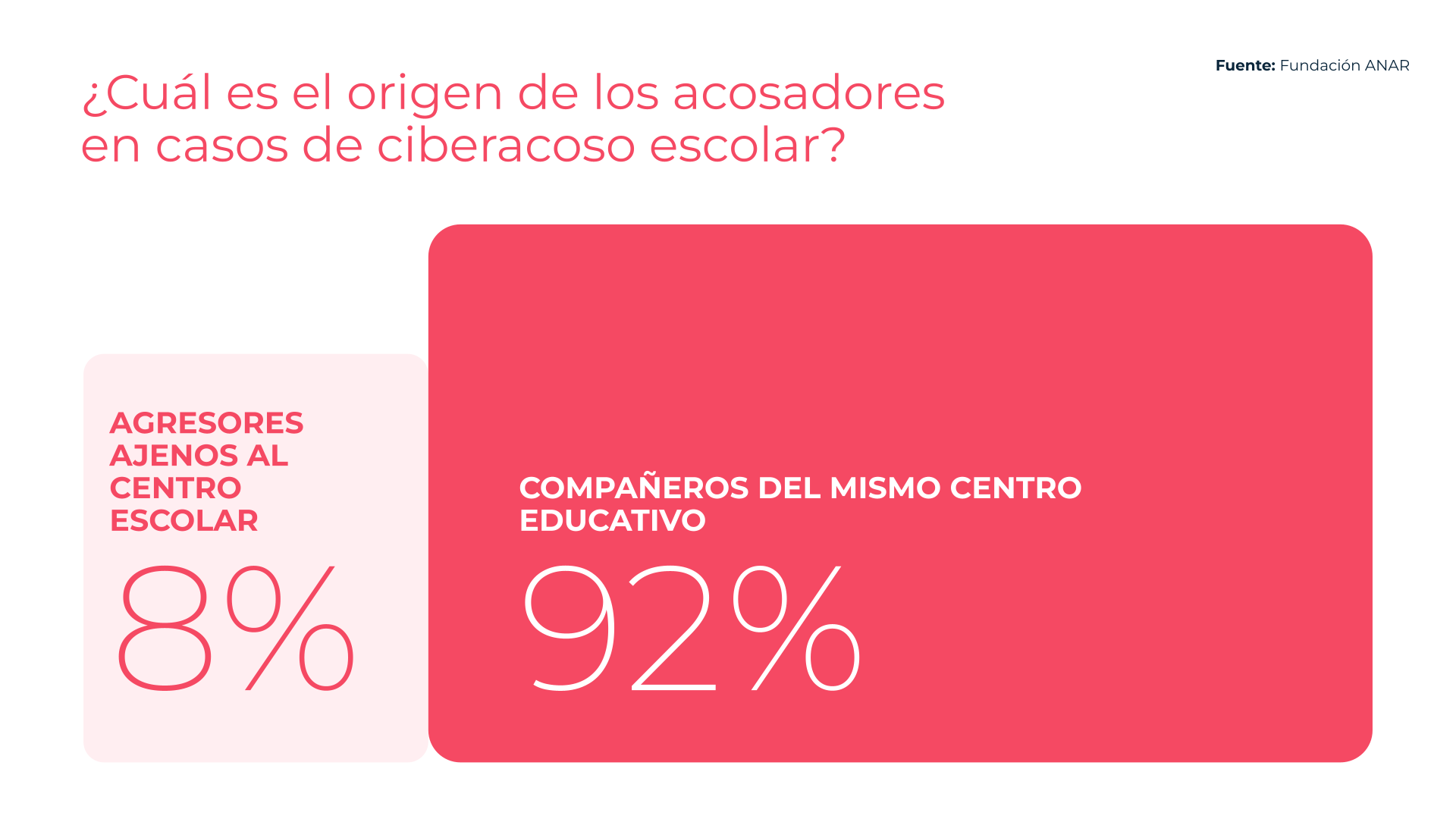
The greatest danger of “curis” lies in the false sense of distance. Students often convince themselves it’s just an abstract internet game, yet statistics from the ANAR Foundation reveal an undeniable reality: in nearly 92% of cyberbullying cases, the perpetrators are classmates from the very same school.
Online anonymity breeds a dangerous sense of impunity among kids who share a classroom every day with the person they are tearing down. This isn’t a conflict born in a vacuum—it is real-world classroom friction that jumps onto screens, gets amplified exponentially, and boomerangs back into school as social ostracization and public targeting.
From the Screen to the Penal Code
The phenomenon has already crossed the line beyond school disciplinary action. Spain’s National Police and regional forces like the Mossos d’Esquadra have issued public warnings reminding youths that these practices are no mere pranks: they can constitute serious offenses against moral integrity, criminal defamation, and civil liability. In regions like La Rioja and the Valencian Community, teachers and families have already filed the first formal legal complaints.
While school leadership teams try to curb the spread of these accounts by tracing comment threads and enforcing internal codes of conduct, experts agree that punishment alone won’t fix the problem. Facing a trend that has yet to reach its most damaging peak, the response demands active co-responsibility from parents in monitoring devices and urgent digital literacy education that teaches young people that getting a laugh online never justifies tearing down a peer’s dignity.