
-
DateMar 26 2026
Artificial intelligence has ceased to be a tool of the future, becoming instead the engine of the present for millions of adolescents and young adults across the globe.
Global data reveals a generation that doesn’t just use technology, but seamlessly integrates it to learn, create, and even manage their emotional well-being.
A Global Adaptation
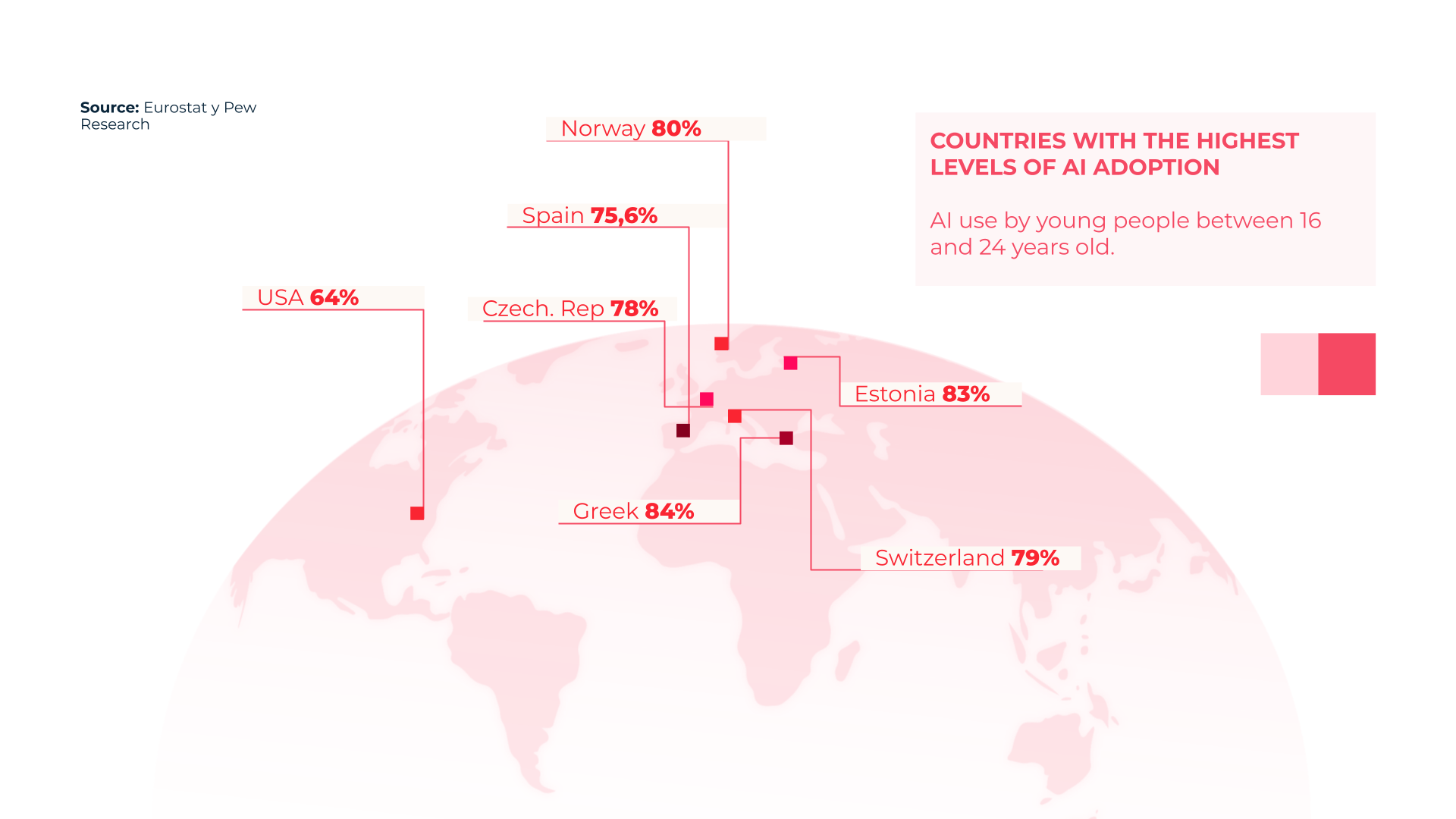
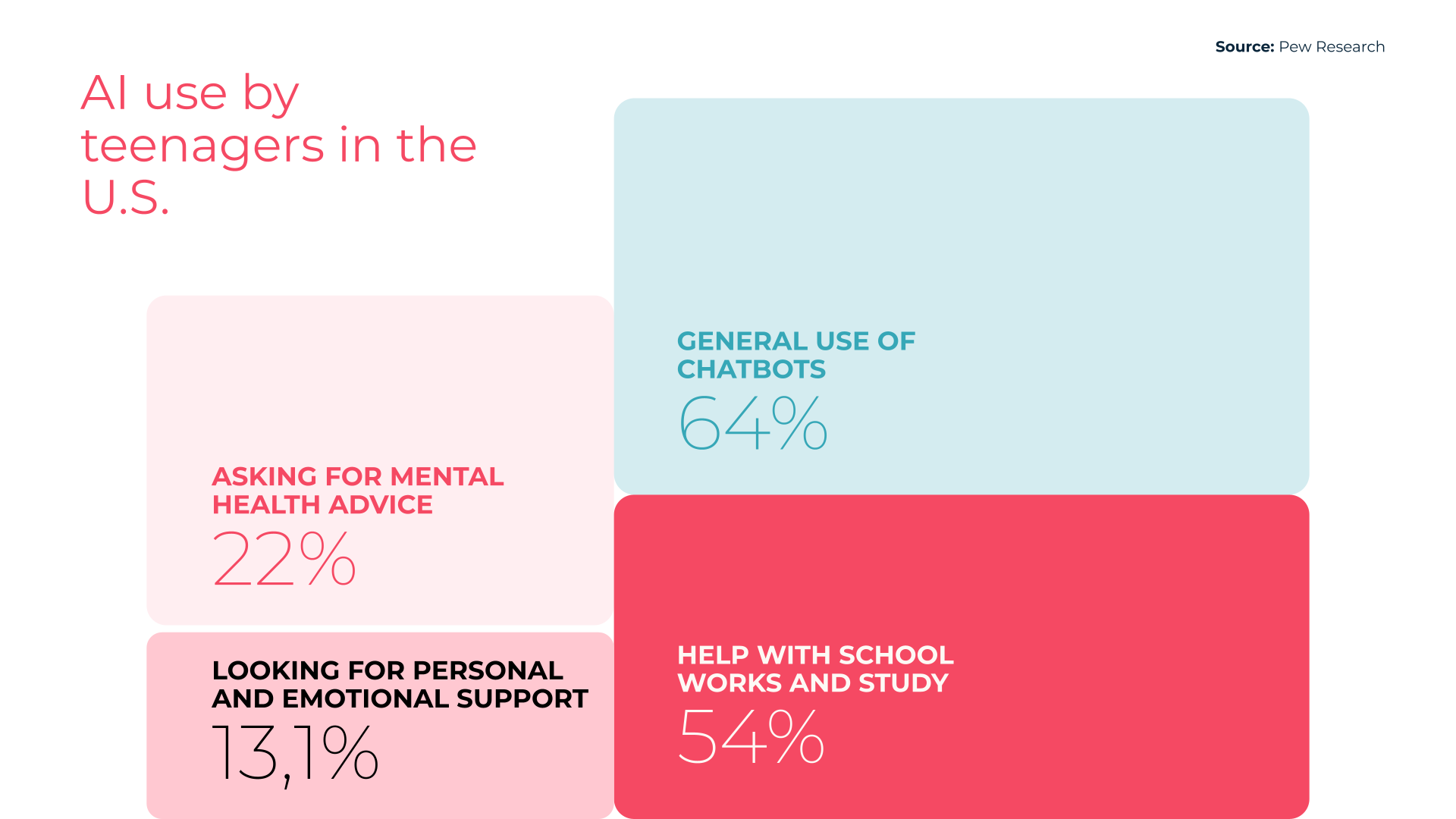
From classrooms in Madrid to homes in New York or cafes in Tallinn, the penetration of generative AI is massive. In the European Union, usage among those aged 16 to 24 is nearing 64%, a figure mirrored almost exactly in the United States, where nearly 30% of teenagers interact with a chatbot on a daily basis.
How is Youth Using It?
What is AI actually being used for? The data shatters the myth that it is only for “copying and pasting.” Young people are transforming it into a tool for personal empowerment.
A Personalized Tutor
54% of young people use AI as a constant academic support. It’s not just about looking up facts; it’s about resolving complex doubts (60%), organizing study schedules (40%), or writing drafts that they later refine themselves. It is, essentially, having a private tutor available anytime, anywhere.
A Mental Health Refuge
One of the most revealing findings is the role of AI as psychological support. 13% of American teenagers turn to AI when they feel sad or anxious. Most strikingly, 92.7% of these users consider the advice they receive to be genuinely helpful. AI is perceived as a safe, judgment-free space for initial emotional management.
A Creativity Booster
Almost half of users (47%) use these tools simply for fun and experimentation. They are creating music, generating images, and exploring new forms of expression that previously required expensive and complex professional software.
Cheating or Optimizing?
A heated debate over ethics exists, but the trend is clear: young people view AI as a way to optimize their processes. If the traditional system evaluates repetitive tasks, the youth uses AI to be more efficient.
While 59% of teenage students believe that using AI to cheat is common practice at their schools, this is actually driving a positive shift in global education. Experts agree that the challenge is not to ban it, but to evolve. AI is pushing schools to value critical thinking and human interaction over the mere delivery of mechanical results.
An Optimistic Outlook
Unlike older generations, where usage barely reaches 7%, young people look to the future with hope. 36% firmly believe that AI will improve their personal lives in the coming decades.
We are witnessing a generation that does not fear the algorithm, but sees it as the perfect ally to conquer an increasingly demanding social and labor market. AI is not just code; for today’s youth, it is the key to a world of limitless opportunities.