
-
DateFeb 25 2026
Spain recently announced its intention to ban children under the age of 16 from accessing social media. This measure, which follows in the footsteps of countries such as France and Australia, seeks to protect young people from an increasingly complex digital environment. However, this raises the question: Is prohibition the best way to prepare teenagers for the future?
Luis Martín, Europe AI Solutions Director at LLYC, shares his opinion in 1 minute:
An obstacle to its development
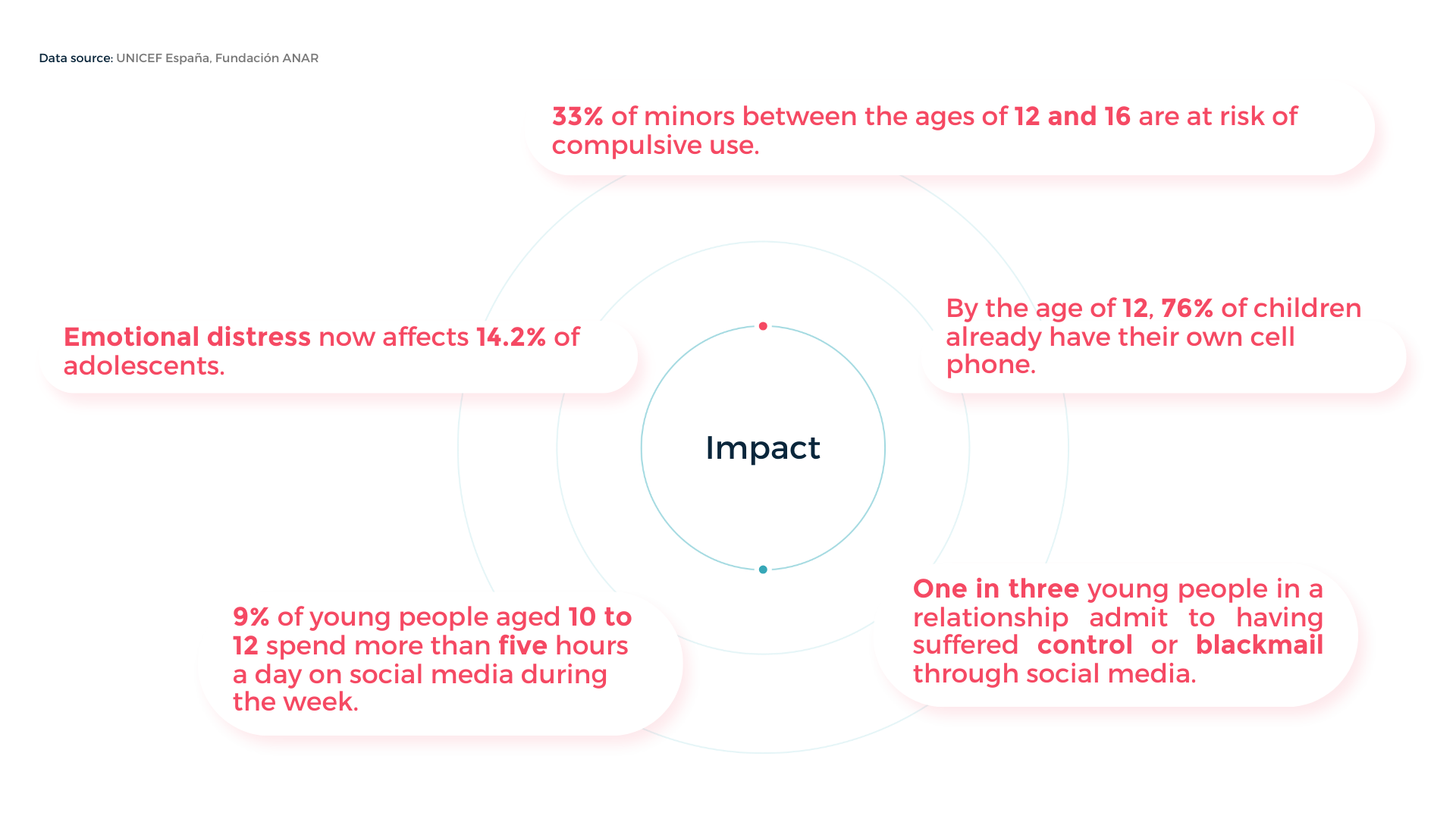
The impact of social media on children and adolescents is profound and affects fundamental pillars of their growth:
Education as a pillar
Although the intention of the measure is to protect, thinking that everything can be solved with a ban is falling short. Social media is already part of young people’s reality and will continue to be there in one form or another.
Data from the Infancia Digital 2025 report indicates that 92.5% of minors are already registered on at least one social network.
The most effective response is not a ban, but education. This should focus on two pillars:
– For young people: So that they understand how these platforms really work and learn to protect themselves emotionally from their dynamics.
– For families: We cannot accompany what we do not understand, nor can we set consistent limits if we are unaware of the environment in which our children navigate.
23.7% of adolescents say that their parents use their cell phones during meals, which weakens the protective role of adults. Without example, you cannot teach.
How can we start promoting responsible use?
Educating about technology is not about simply prohibiting it, but rather teaching people how to live with it. To achieve this, some of the key factors that can be decisive are:

Ultimately, true protection for minors will not come solely from laws, but from their ability to navigate the internet with judgment, autonomy, and responsibility.