
-
DateNov 25 2026
When navigating the whirlwind of deals, markdowns, and major shopping events like Black Friday, traditional browsing habits seem to have fallen by the wayside for younger generations. Walking through brick-and-mortar stores or scrolling endlessly through product listings is rapidly being replaced by a quick query in a chat window. According to data from the Cetelem Observatory, nearly half of young Spaniards (48%) now turn to generative AI tools for recommendations before making a purchase.
This shift is far more than a passing tech trend: just 13% of consumers aged 18 to 35 say they have never interacted with AI—six percentage points lower than the general population. Within this landscape, ChatGPT (75%) and Gemini (58%) have cemented themselves as go-to digital shopping advisors, particularly when buying tech (45%), fashion (27%), and beauty products (26%).
Goodbye to the Hype: Why AI Beats Influencers
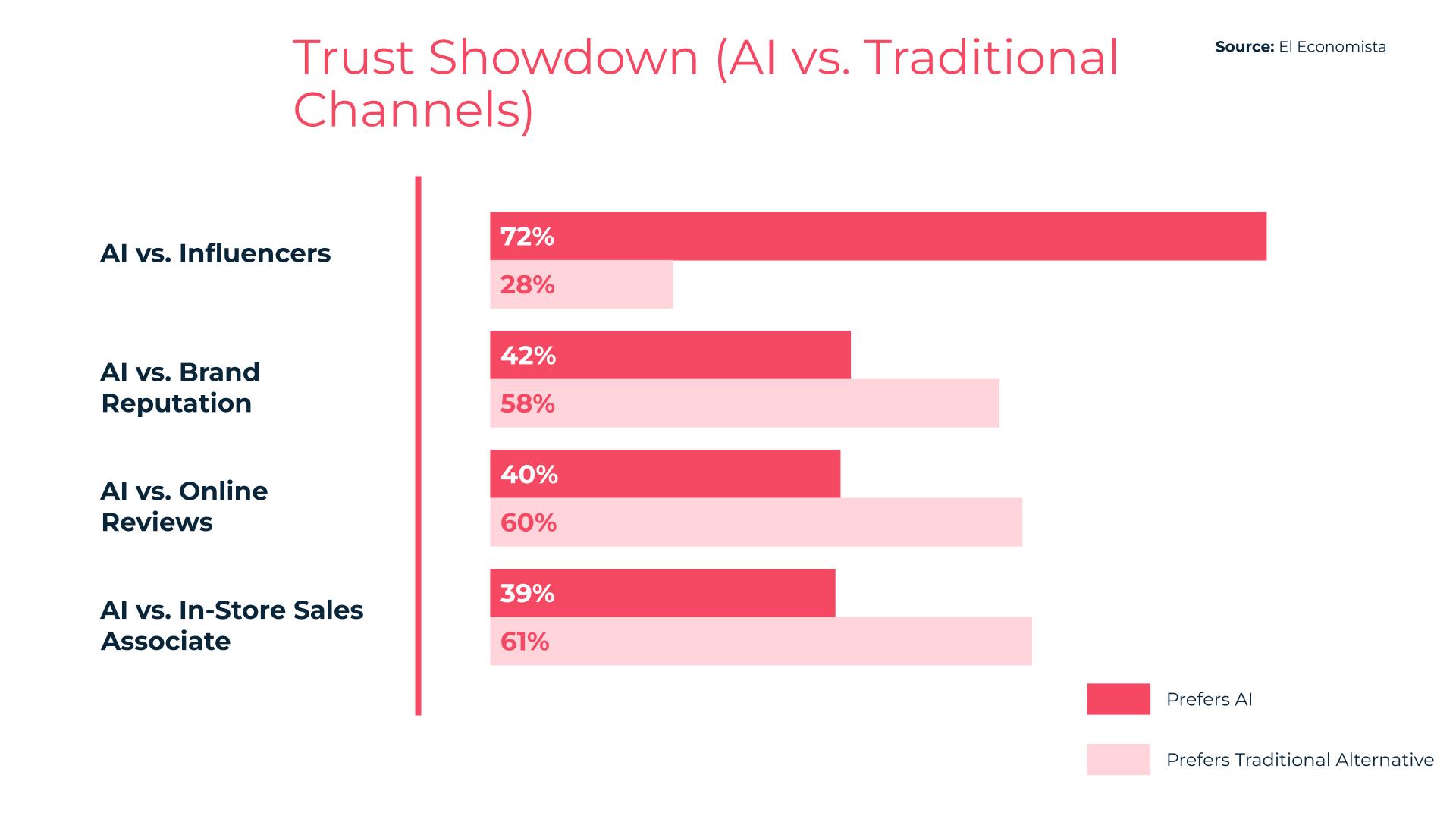
One of the most significant turns in this trend comes down to perceived trustworthiness. While inner circles (family and friends, at 51%) and industry experts (41%) still top the charts for overall trust, the battle among digital tastemakers has flipped dramatically: when forced to choose between an influencer’s take and an AI assistant’s advice, a staggering 72% of young consumers side with the algorithm.
The oversaturation of paid sponsorships on social media has pushed shoppers toward a tool they view as more objective and genuinely tailored to their needs. Still, this vote of confidence isn’t a blank check. When pitting AI against an in-person sales associate at a physical store, 61% of young shoppers still prefer the human touch, and 58% put more stock in a brand’s established reputation than in a virtual assistant’s pitch.
The Wallet Paradox: The Algorithm That Saves You Money… and Nudges You to Spend More
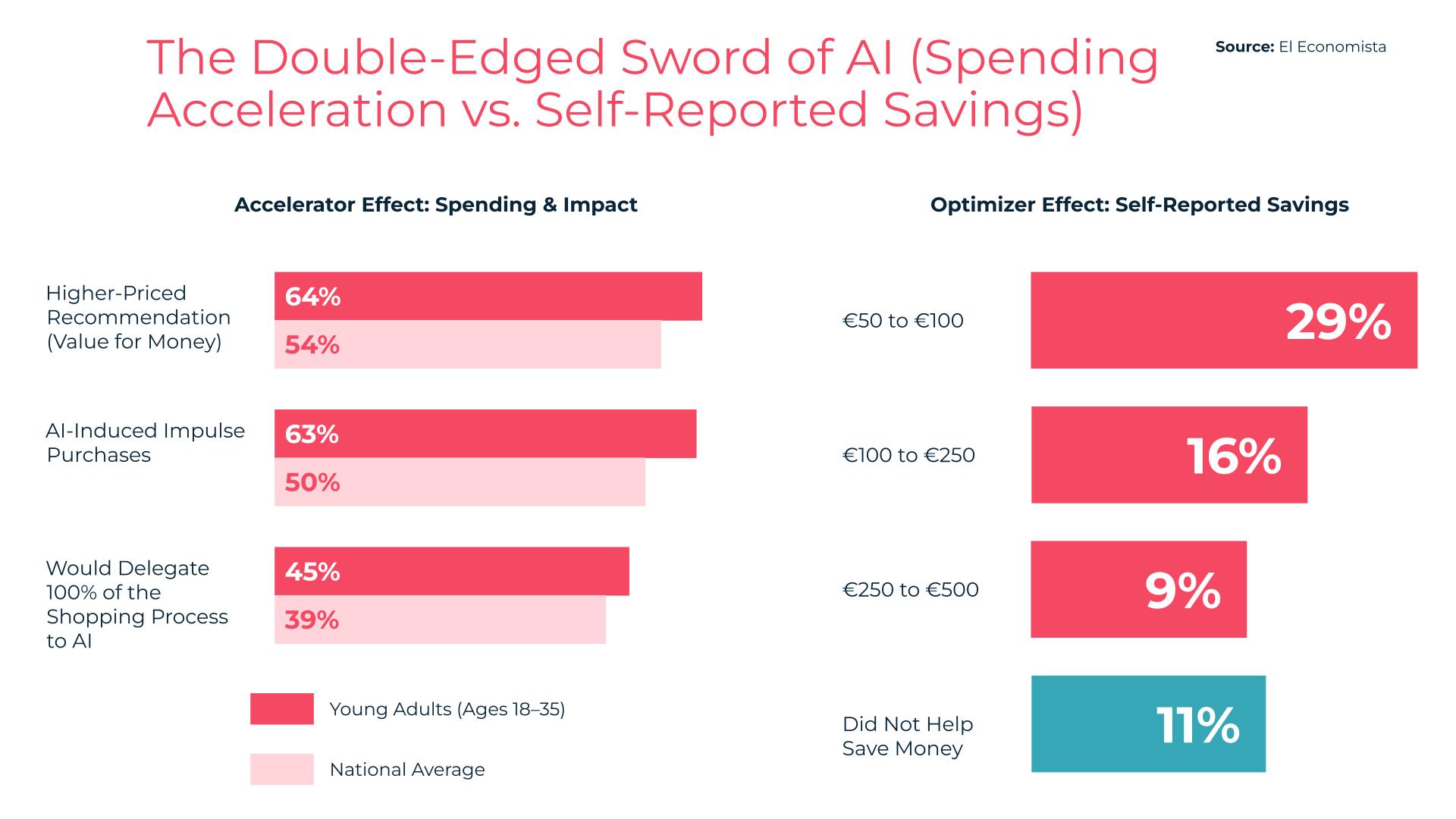
The promise of stretching a budget is AI’s biggest hook: 29% of young respondents report saving between €50 and €100 (roughly $55 to $110) over the past year thanks to AI-driven recommendations, while another 16% put their savings between €100 and €250 ($110 to $270). In fact, only 11% say AI hasn’t helped ease the strain on their wallets.
Yet the algorithm hides a potent commercial flip side. Sixty-three percent of young shoppers admit to making impulse buys triggered solely by an AI suggestion—13 percentage points above the market average. Even more telling, in 64% of cases, the tool ended up steering them toward a higher-priced item under the pitch that it offered better “bang for their buck” (+10 percentage points over the average shopper). Right in the middle of peak holiday sales, AI acts not just as an analytical filter, but as a subtle upselling engine pushing buyers toward higher-end tiers.
Autonomous Shopping vs. the Data Privacy Red Line
Their relationship with the tech goes well beyond asking for advice: the dawn of agentic commerce is already here. Nearly half of young consumers (45%) say they would let an AI make autonomous purchases on their behalf if it knows their preferences and budget, and 28% would hand over their entire shopping routine to an automated assistant.
However, this openness runs parallel to a sharp critical stance on privacy and transparency. While 59% would share their income and spending habits in exchange for smarter financial planning, they draw a hard line at commercial exploitation: 82% of young people demand that any sponsored recommendation be explicitly disclosed. Meanwhile, 78% worry about companies mining their personal data to gauge their purchasing power, and 73% call it unfair for algorithms to deploy dynamic pricing tailored to an individual user’s profile.
This Black Friday, younger generations aren’t just shopping with new tech—they are rewriting the rules of e-commerce, demanding a non-negotiable balance between algorithmic convenience and advertising ethics.