
-
DateFeb 25 2026
In 2026, we no longer talk about AI as a search engine, but as an assistant. But, as with any team, the quality of the result depends on the clarity of the instructions. This is where a decisive element comes into play: the prompt.
What is a prompt?
A prompt is an instruction, question, or set of instructions shared with a generative artificial intelligence system (such as Chat GPT, Gemini, Perplexity, etc.) to obtain a specific response, content, or actions. It is a channel of communication between the user and the AI, and its effectiveness greatly influences the quality and relevance of the responses obtained.
Why does it matter?
Knowing how to craft good prompts has a direct impact on the productivity, efficiency, and effectiveness of our work with AI. According to the study “AI literacy and its implications,” there is a notable correlation between how we ask questions and what we receive:
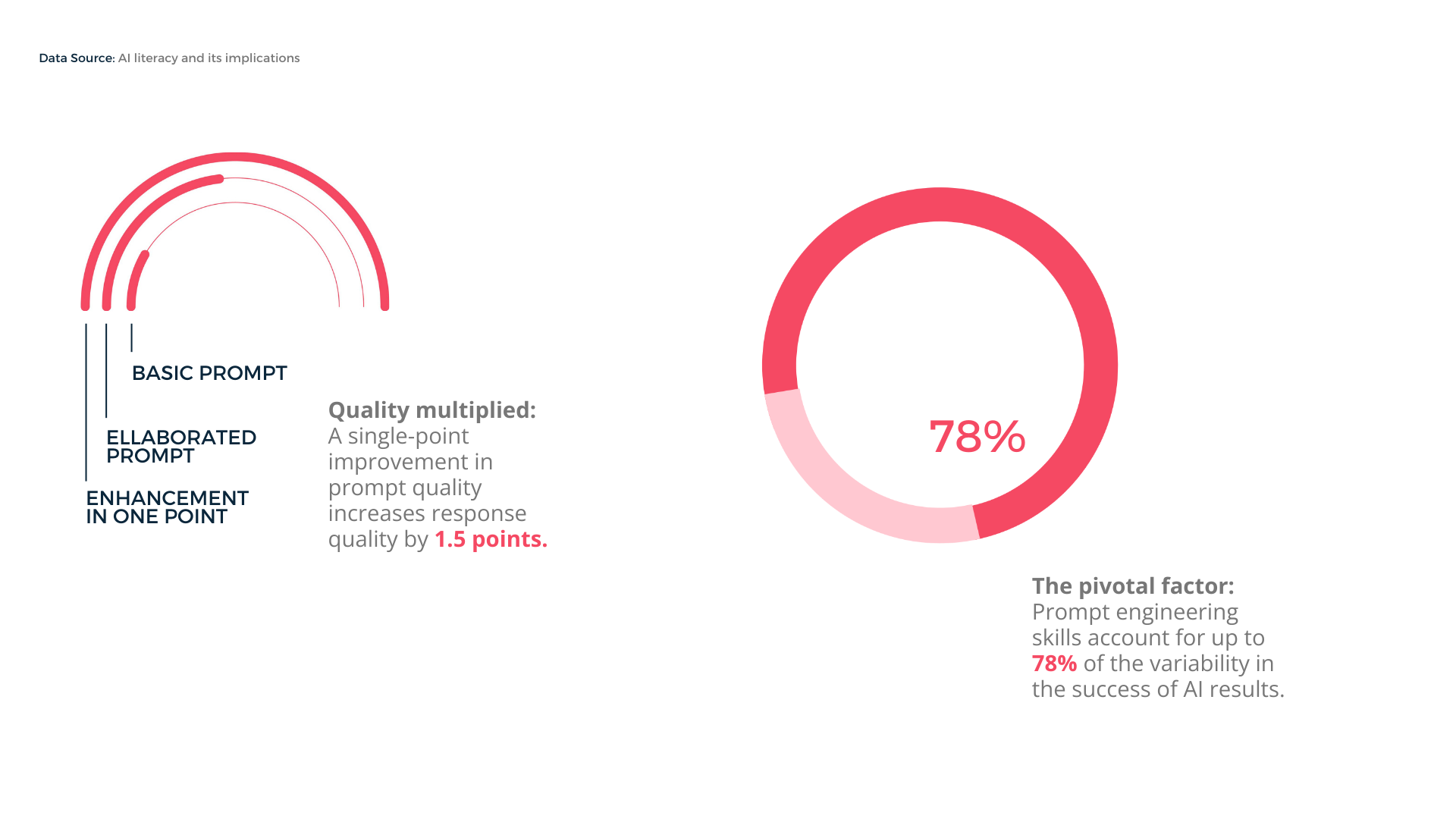
A bad prompt does not only mean getting a mediocre response, but also leads to a waste of time and resources. Vague and poorly refined requests lead to rework situations, where the user must invest time trying to correct hallucinations or general responses, negating the competitive advantage of AI.
The Master Formula: The BRAIN Method
While the Context, Task, and Format model is a solid foundation, for those seeking professional or academic results, the BRAIN Method has become the gold standard in 2026. This acronym helps ensure that no essential ingredient is overlooked:
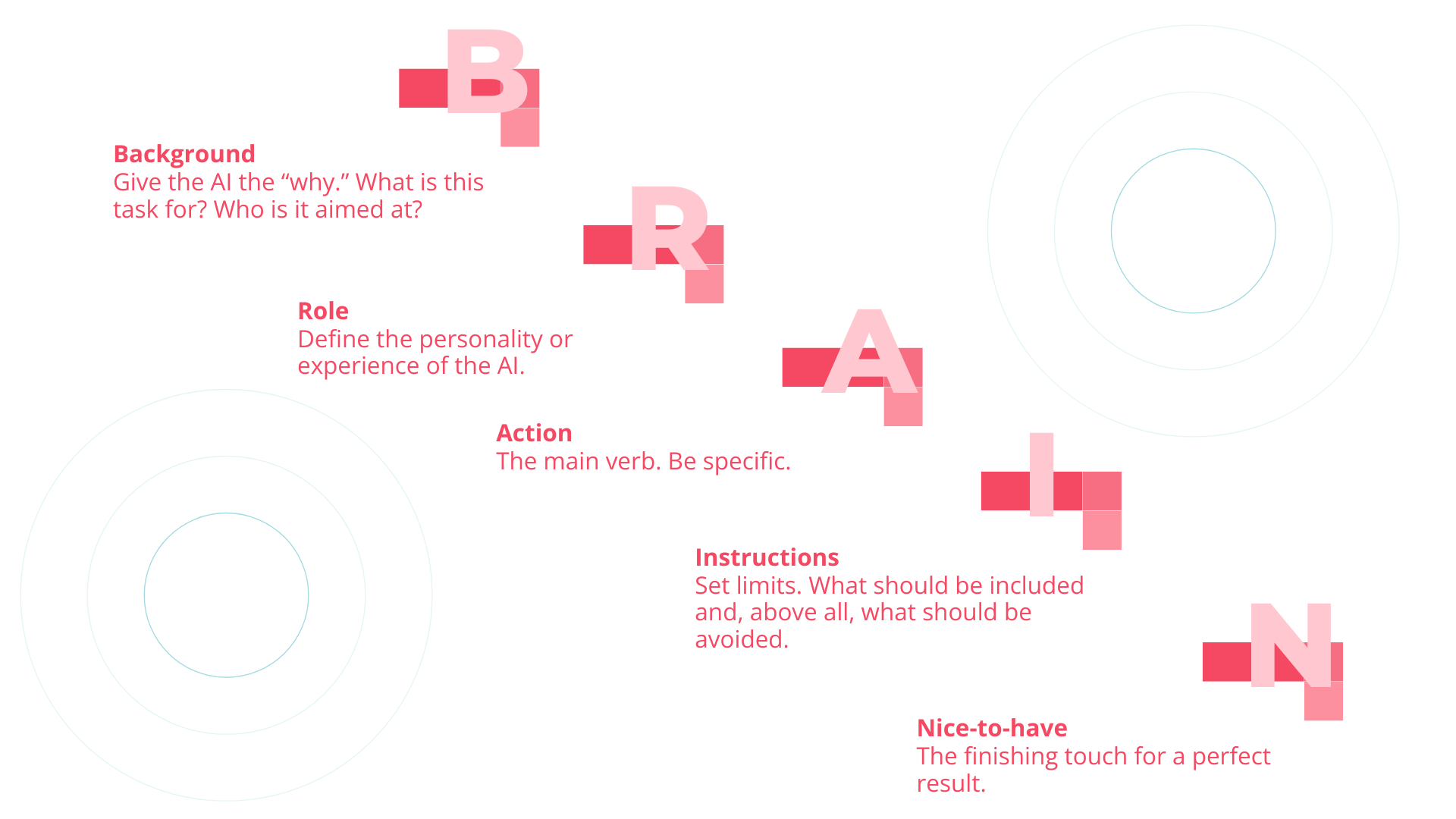
Example: (Context) “I am preparing a presentation for 15-year-old students on renewable energy.” (Role) “Act as a science communicator who is an expert in sustainability.” (Action) “Analyze and compare the efficiency of solar panels vs. wind turbines.” (Instructions) “Do not use excessive technical terms. Be sure to include real data from the latest report by the International Energy Agency.“ (Format) ”Present the information in a comparative table and add a glossary of 5 key terms at the end.”
Iteration holds the key
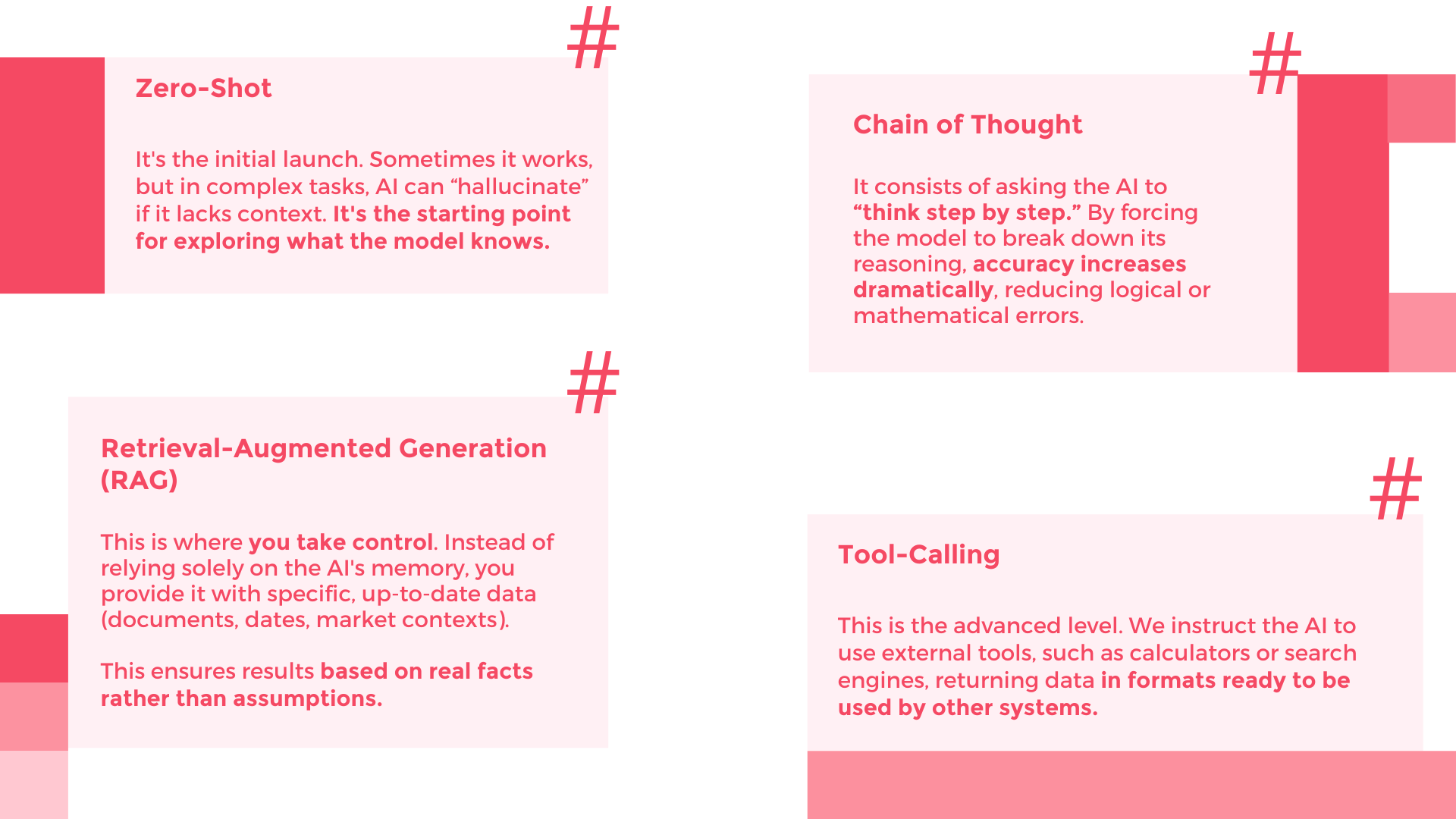
To stop receiving generic responses and start getting brilliant solutions, we must understand that interacting with AI is an iterative process. No matter how good our prompt is, we will not always get answers that completely satisfy us.
Therefore, there are some practices that can help us redirect our agent and optimize the results it presents to us:
A very present future
The Future of Jobs Report 2025 estimates that 39% of current skills will soon become obsolete. However, this is not a threat, but an invitation. AI is not here to replace professionals, but to empower those who know how to guide it.
Learning to prompt is, ultimately, learning to communicate better. Interestingly, by trying to be clearer with machines, we are learning to be more precise, empathetic, and structured with other human beings. The future belongs to those who know how to ask the right questions.