
-
DateFeb 25 2026
AI is capable of writing emails, summarizing 400-page books in seconds, and solving complex equations with just a photo. We may be facing the greatest competitive advantage for speeding up the completion of many tasks.
However, this can lead us to delegate too much and stop making certain intellectual efforts that are fundamental to the development of our cognitive skills.
Where is the key? As with everything, in balance and distinction.
AI as an enabler
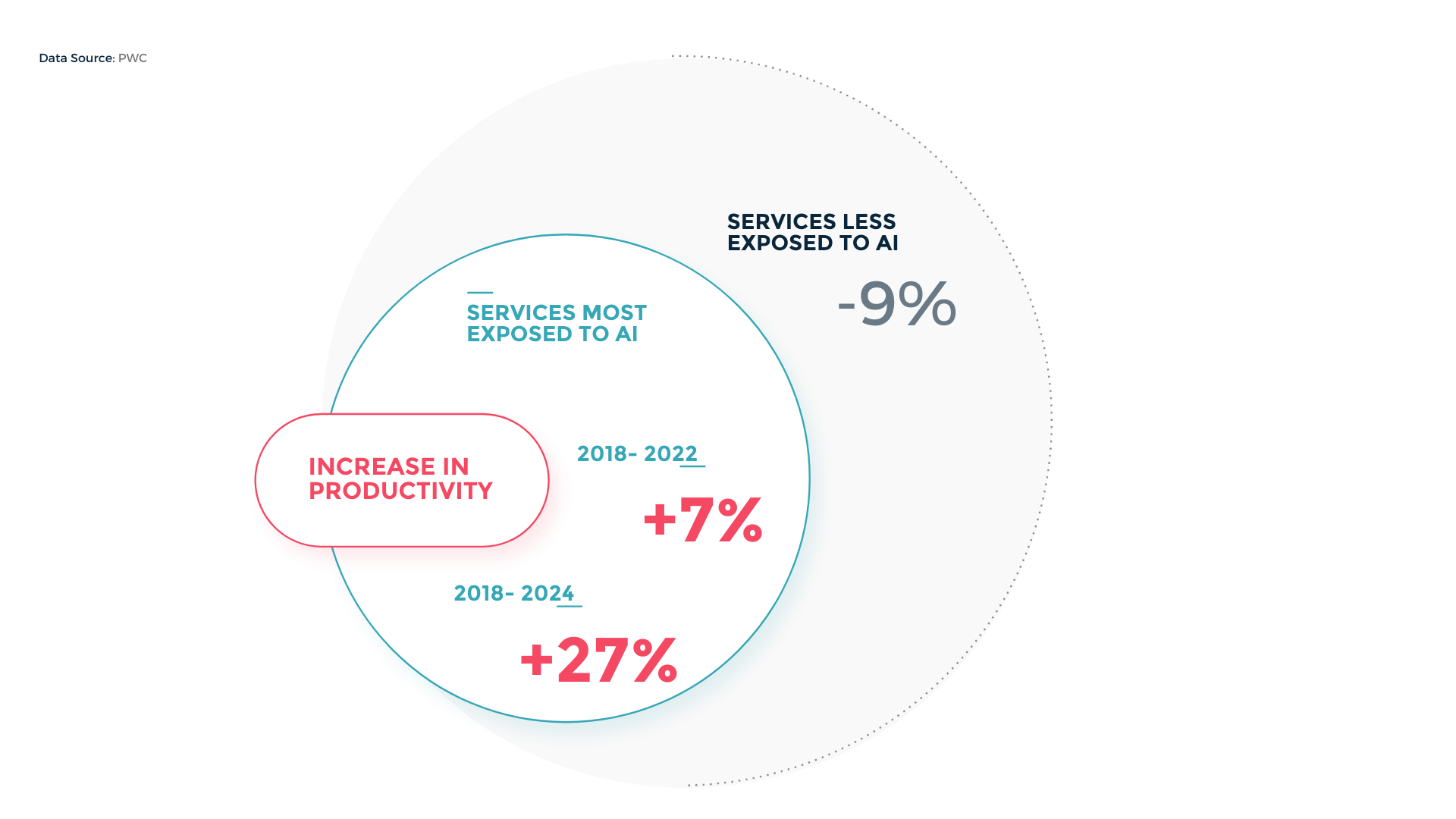
Automation is improving worker efficiency and productivity. Saving time on repetitive tasks that require little intellectual effort but take up a considerable amount of time is key to being able to focus on more creative and innovative issues.
Its integration into everyday life is offering considerable advantages:
– The end of writer’s block?: AI allows us to structure ideas, share proposals, and guide us when starting a task.
– Delegation of low-value tasks: From summarizing endless email threads to compiling insights from a meeting, agents free us from certain tasks so we can focus on others.
– Personalized learning: Tools such as ChatGPT or Copilot allow us to create study or skill development itineraries, accompanying users in the assimilation of new skills that are crucial to their performance.
Factors such as these are having a direct impact on productivity:
If there are only advantages, what’s the problem?
Despite the countless advantages that AI offers, there is a risk of ceasing to perform certain tasks or efforts that compromise our cognitive abilities.
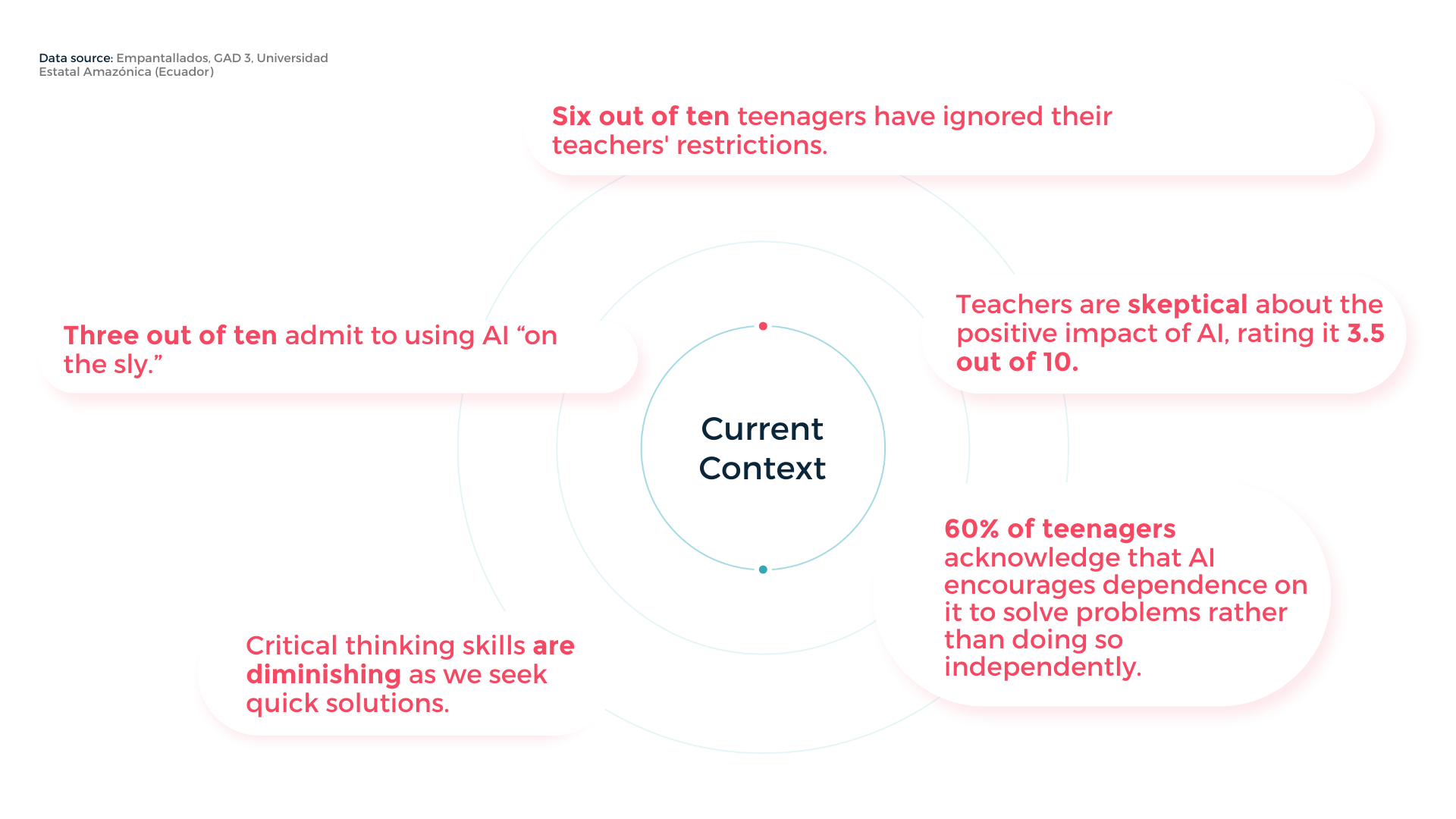
The danger lies in ceasing to think, abandoning our own judgment, and relying excessively on artificial intelligence. These factors are beginning to concern teachers, because although students are using generative tools to improve the quality of their studies, teachers are beginning to observe certain patterns that are cause for concern.
Where is the balance?
The key is learning to identify which tasks can be automated without costing us cognitive capacity.
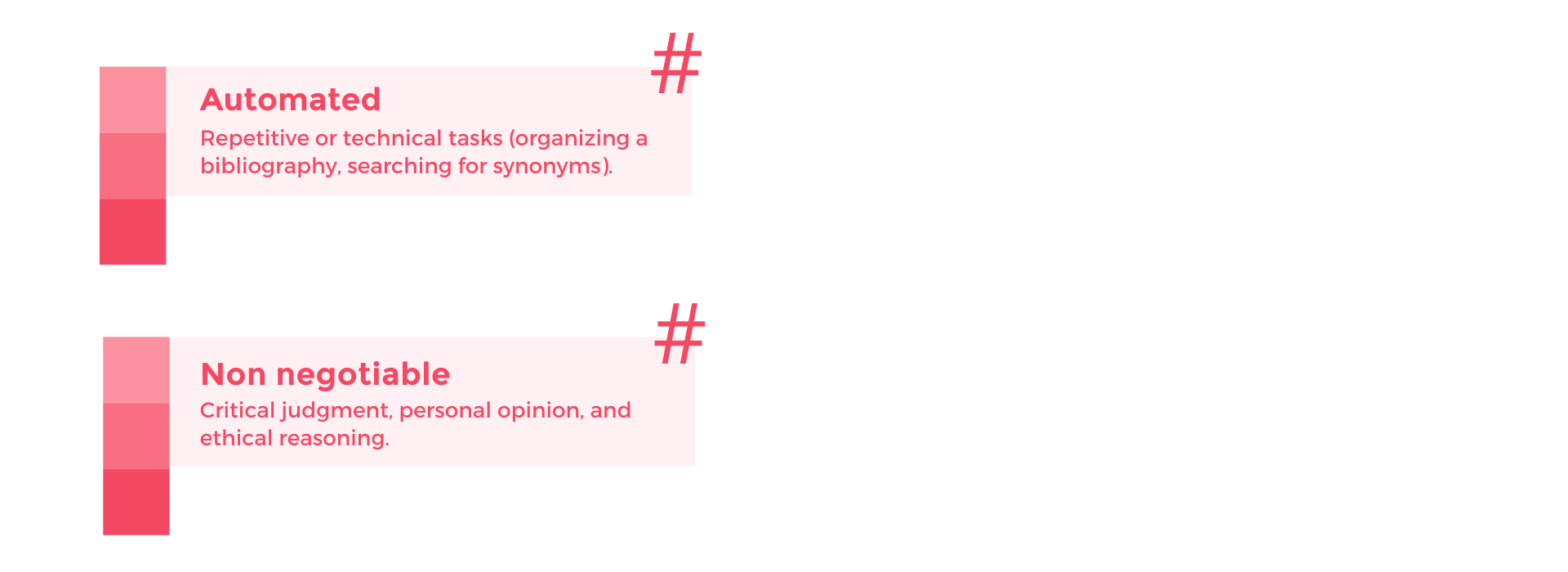
We should not use assistants as substitute machines that do our tasks for us, but rather as tools that help us improve, reason, be critical, enhance, compare, and be more efficient and productive.
All of this should always be done from a skeptical, critical, and proactive position, which means putting ourselves in the driver’s seat and not letting them make decisions for us without criteria imposed from our position.
Use automation to improve, not to cut corners
One way to avoid cognitive decline is to change the direction of automation. Instead of asking AI to do the work for us, we should ask it to evaluate it.
AI as a shortcut: “Write me an essay on ethics in science.” (Result: The brain does not work).
AI as an enhancer: “I have written this essay. Analyze my arguments, look for contradictions in my logic, and tell me what points I have overlooked.” (Result: The brain is forced to reevaluate and delve deeper).