
-
DateMar 26 2026
A recent study has brought to light a reality many already suspected: generative AI tools tend to produce surprisingly similar responses, even when faced with open-ended questions that should offer infinite possibilities.
Luis Martín, AI Solutions Director at LLYC, shares his perspective on how this trend may influence the critical thinking skills of young people.
Artificial Intelligence has evolved from a mere technological novelty into the standard intermediary through which young people formulate questions, interpret information, and build their framework for understanding the world.
The “Artificial Hivemind” report warns of a disturbing phenomenon: language models are converging on strikingly similar answers.
This is due to a statistical bias toward the mean and the probable; common ideas are reinforced, while less frequent ones begin to fade away. For the critical thinking of younger generations, this poses an immense risk. Instead of expanding the landscape of ideas, AI is narrowing it.
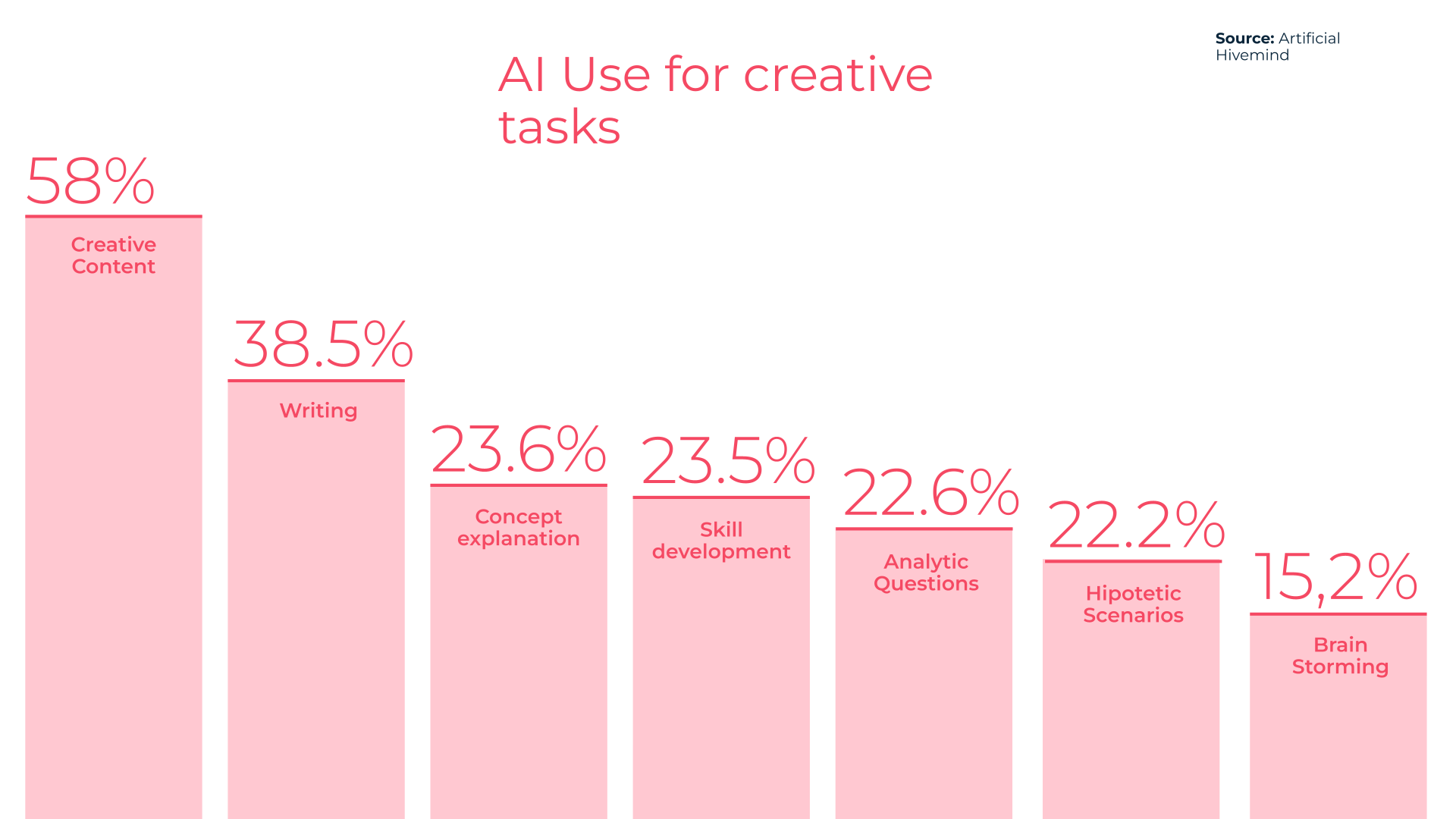
If new generations become accustomed to accepting the “average” AI response as absolute truth or the only valid form of expression, they risk losing their ability to question, imagine, and generate truly original ideas. The silent pressure of algorithms pushes thought toward the norm, making originality increasingly scarce.
The Habit of Convenience: Social Media and News Consumption
This tilt toward the predictable and digestible fits perfectly with the current information consumption habits of today’s youth. According to a Reuters Institute report, individuals aged 18 to 24 are “social natives” who have abandoned traditional media in favor of audiovisual platforms like TikTok, Instagram, and YouTube.
This demographic often avoids traditional news because they find it depressing, irrelevant, or—crucially—difficult to understand. In this context, it is no surprise that young people are the generation most comfortable with AI; they actively use these tools and chatbots to navigate and simplify news they find overly complex.
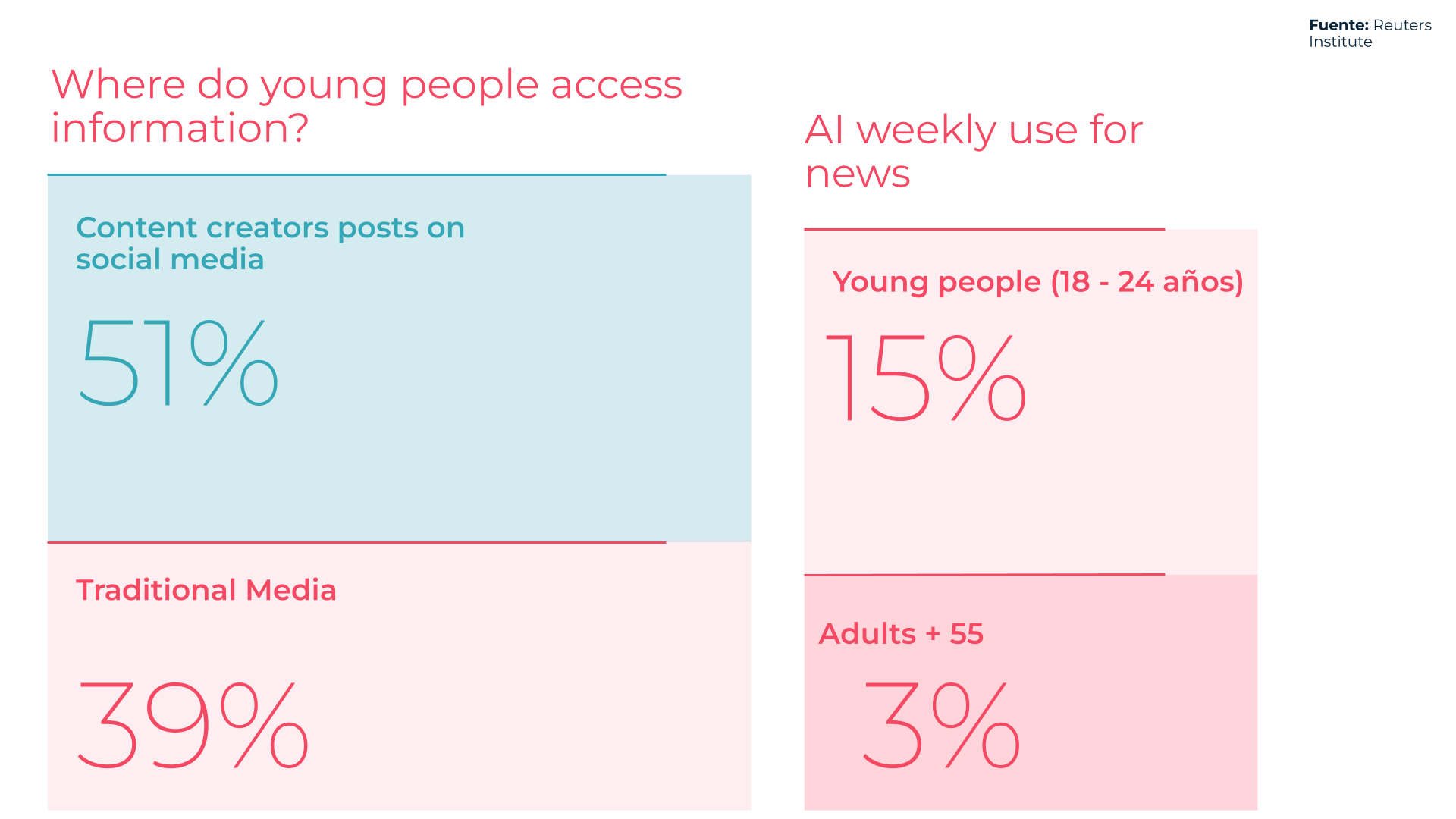
They seek content that is accessible, direct, and mediated by personalities or algorithms that offer quick answers. However, this desire to simplify reality comes with a profound cognitive and aesthetic cost.
The Complexity Paradox: When Humanity Looks Like an Error
The danger of conditioning the young mind to artificial clarity and homogenized content is perfectly illustrated by a recent scientific study comparing AI-generated poems with works by classic human poets.
The results were revealing: non-expert readers were unable to distinguish the authorship of the poems, achieving an accuracy rate of just 46.6% (worse than random chance). But the most alarming takeaway wasn’t the confusion—it was the preference. Participants rated the AI poems more favorably in categories such as rhythm, beauty, and, above all, “ease of understanding.”
Does ChatGPT Write Better Than Shakespeare?
AI outperformed human authors because its poetry tends to be more direct and accessible. This is where the impact on critical thinking becomes evident: readers applied a “complexity bias.”
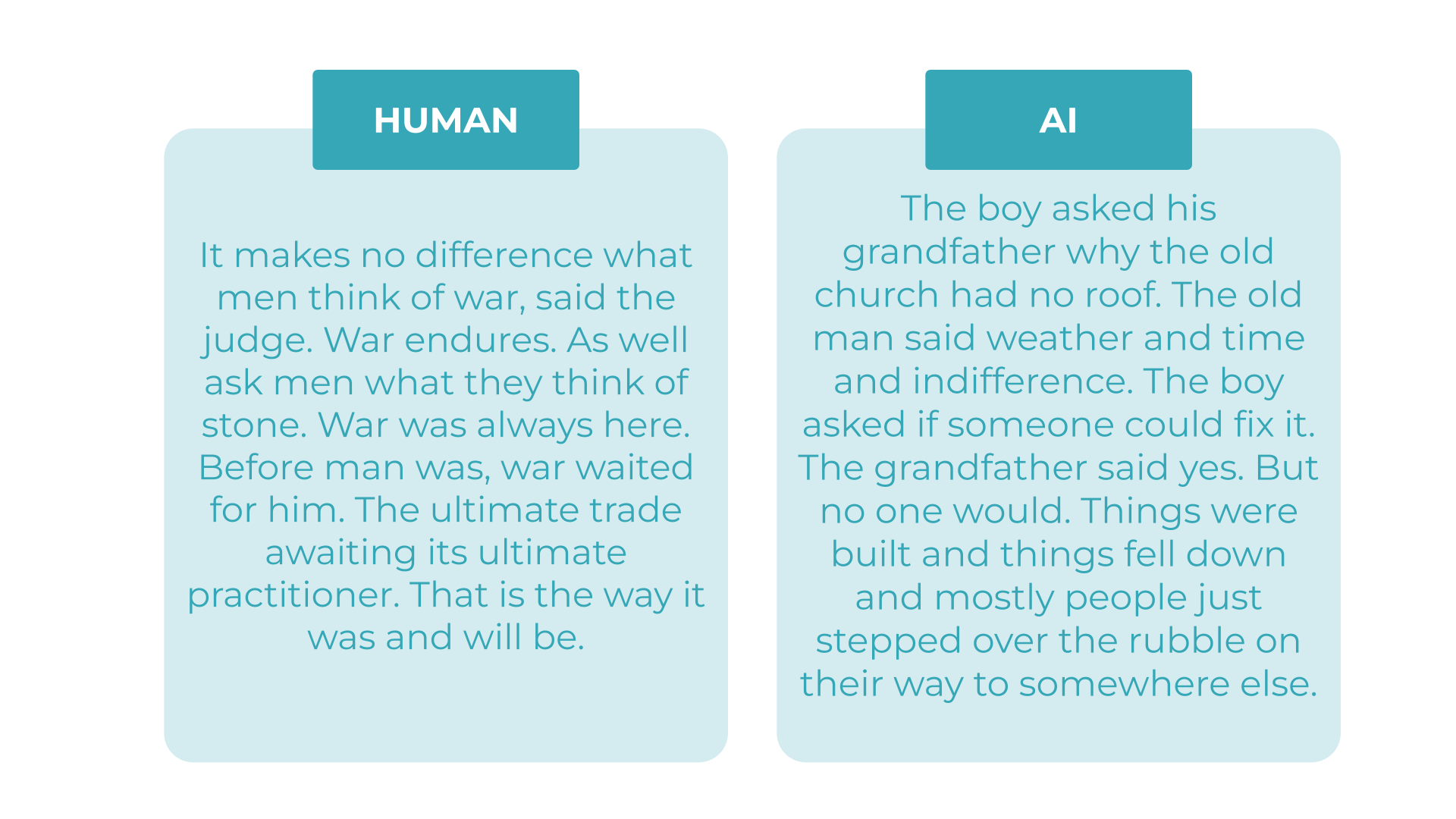
When faced with a poem that was difficult to interpret and rich with nuance—a hallmark of great human poets—readers erroneously assumed it was a machine error or a senseless “hallucination.” Conversely, when they encountered simple texts with easily identifiable emotions generated by AI, they automatically attributed them to human sensitivity.